How to pour a small concrete slab in Australia
A small slab for a garden shed, water tank or outdoor area is a very achievable DIY job. Most of the success comes down to preparation: a compacted base, square formwork and mesh sitting in the right place.
The short version
Dig out the area, compact about 100 mm of road base, set formwork, lay a vapour barrier and reo mesh on bar chairs, then pour about 100 mm of concrete. A 3 × 3 m slab needs about 0.9 m³ of concrete and 2 sheets of reo mesh.
Before you start
Approvals. Small garden slabs often don’t need approval, but rules vary by council and by what the slab is for. Check with your council, especially near boundaries or for structures such as carports.
Services. Before you dig, use Before You Dig Australia to check for underground pipes and cables.
The base
| Layer | Typical depth | Notes |
|---|---|---|
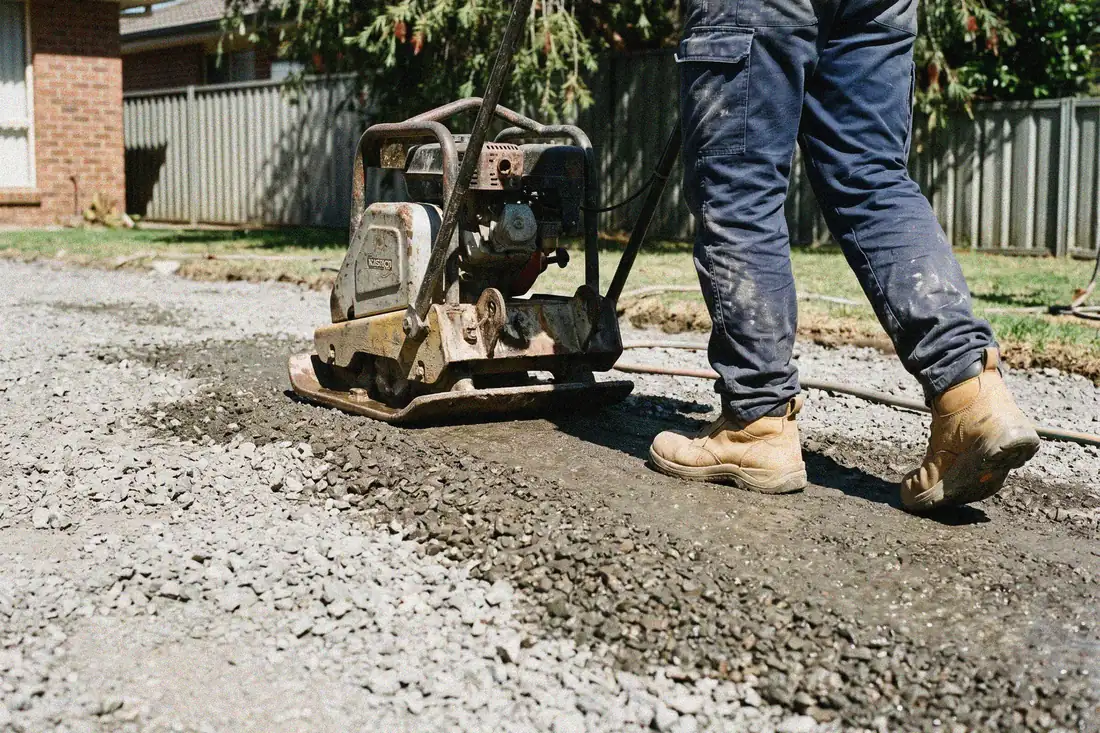
| Road base | About 100 mm, compacted | Compact in layers with a plate compactor |
| Sand blinding (optional) | About 20–30 mm | Smooths the surface under the membrane |
| Vapour barrier | — | Polythene sheet, lapped and taped at joins |
| Reo mesh on bar chairs | Set within the slab | SL62 or SL72 for most small slabs |
| Concrete | About 100 mm | Thicker for vehicles; follow any engineer’s design |
Step by step
- Mark out the slab and check it’s square by measuring the diagonals.
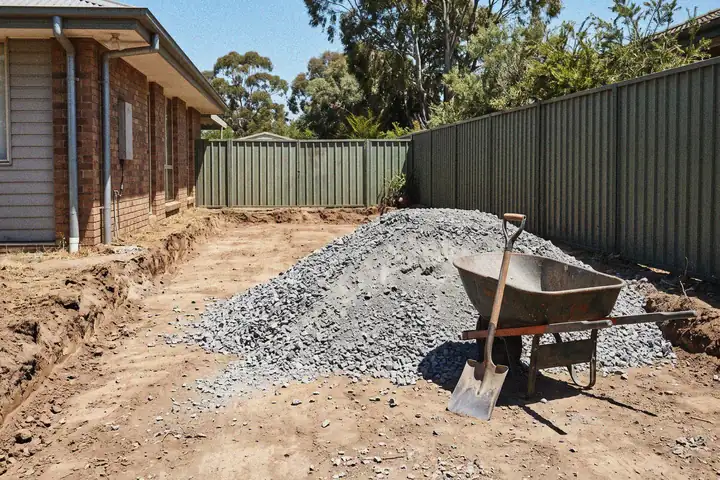
- Dig out, then spread and compact road base in layers.
- Build formwork from timber boards and pegs, set level or with a slight fall for drainage.
- Lay the vapour barrier, lapping and taping the joins.
- Place reo mesh on bar chairs, lapping sheets where they meet (often around 225 mm; follow any drawings).
- Pour the concrete, spreading it into the corners.
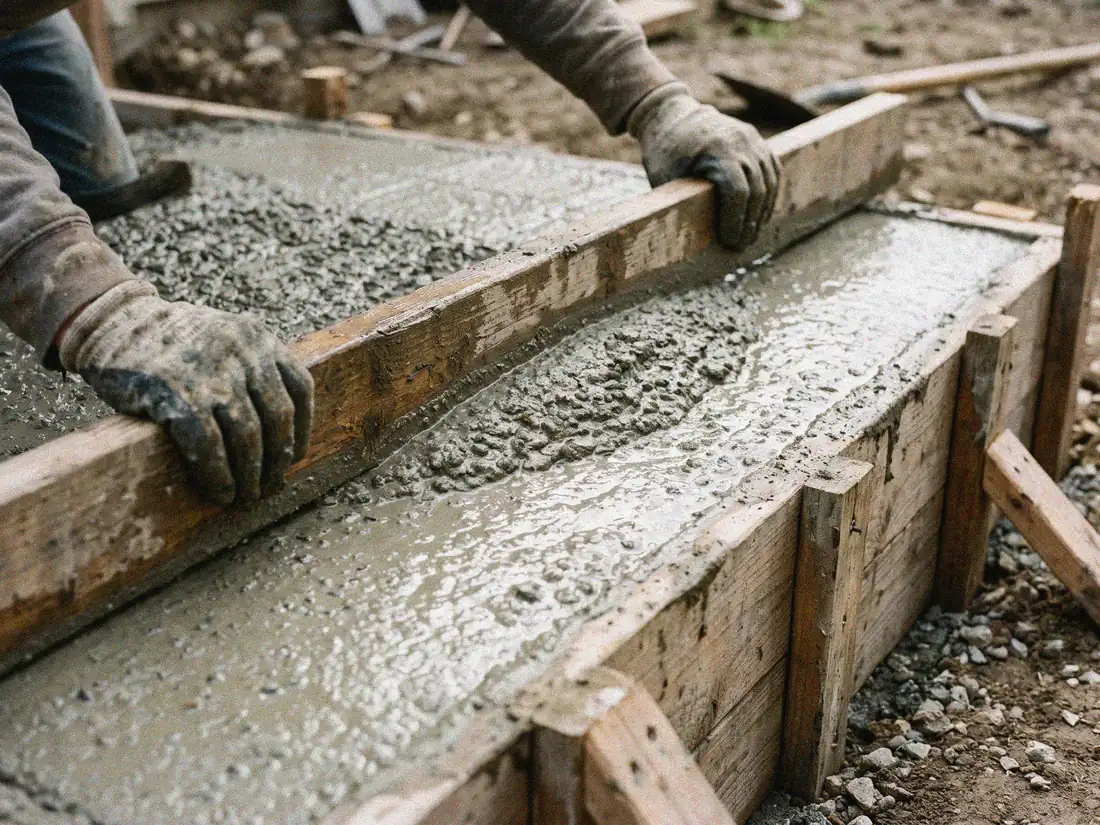
- Screed it level across the formwork with a straight edge, then float and finish.
Bags, mix your own, or premix truck?
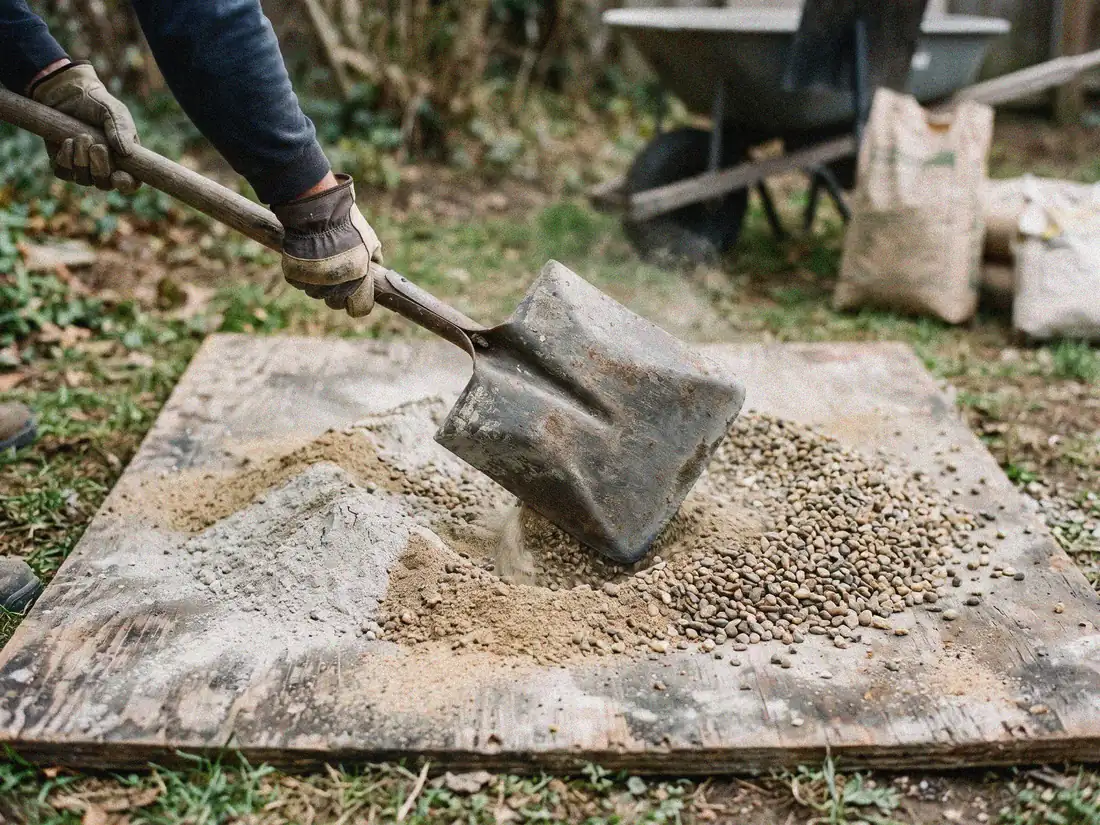
For about 1 m³, you can mix your own (a common ratio is 1 part cement, 2 parts sand, 3 parts aggregate), use 20 kg bags of premixed concrete, or order from a premix supplier. Bags are easy but heavy: 1 m³ is roughly 108 × 20 kg bags. Many premix suppliers have a minimum order or charge a short-load fee for small volumes, so ask when you call.
Worked example: a 3 × 3 m slab, 100 mm thick
| Item | Amount | Calculator |
|---|---|---|
| Concrete | 0.9 m³ (add about 10%) | Concrete |
| Or mix your own at 1:2:3 | About 17 × 20 kg bags of cement, 0.74 t of sand and 1.1 t of aggregate | Concrete mix |
| Road base (100 mm) | About 1.9 t | Road base |
| Reo mesh | 2 sheets of 6 × 2.4 m (cut to fit) | Reo mesh |
Curing
In Australian heat, concrete can dry too quickly, which weakens the surface. Keep it moist and shaded for the first few days by spraying it or covering it with plastic or damp hessian. Avoid pouring in the middle of a very hot, windy day if you can.
Mistakes to avoid
- Mesh lying on the plastic: always use bar chairs.
- Letting it dry too fast in hot weather.
- Not checking for services before digging.
- Too much water in the mix.
Calculators for this job
More guides
 How to build a raised garden bed in Australia
 Crusher dust vs road base: which do you need?
 How to lay synthetic grass in Australia
Barrowload guide · Australia · Figures are typical; always check your product and local rules.