How to lay synthetic grass in Australia
Synthetic grass suits Australian backyards that struggle with shade, drought or heavy wear. A professional-looking result comes down to two things: a firm, free-draining base, and ordering the right amount of grass.
How do you lay synthetic grass?
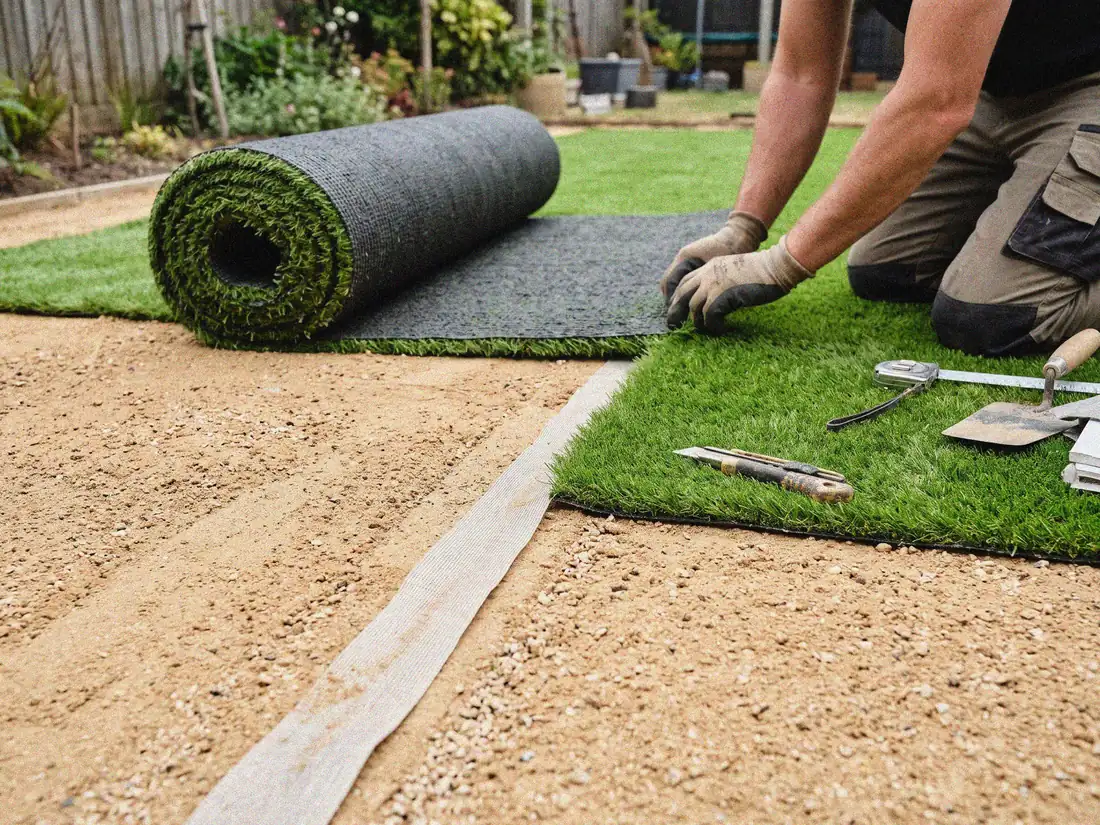
Remove the turf and about 7–10 cm of soil, compact a crushed rock base, add a thin levelling layer, lay weed membrane, then roll out the grass with the pile all facing one way. Join the strips, trim the edges and brush in silica sand. A 6 × 4 m lawn needs 25.6 m² of grass (one 6.1 m strip from a 4 m roll), 8 × 20 kg bags of infill sand and about 1.8 m³ of road base.
What goes under synthetic grass?
| Layer | What it does |
|---|---|
| Compacted crushed rock (road base) | A firm, free-draining foundation |
| Thin levelling layer of fine crushed rock or sand | A smooth surface so bumps don’t show through |
| Weed membrane | Stops weeds growing up through the grass |
| Synthetic grass | The finished surface |
| Silica sand infill, usually 5–8 kg per m² | Weighs the grass down and helps the blades stand up |
Why do I need more grass than my lawn size?
Synthetic grass comes in rolls of a fixed width, usually 2 m or 4 m, and you pay for whole strips. The synthetic grass calculator tries both directions and both roll widths, then picks the layout with the least waste, adding a little to each strip for trimming.
How do I lay it, step by step?
- Remove the old lawn and dig out about 7–10 cm.
- Fix edging around the area to hold the base and give the grass a firm edge.
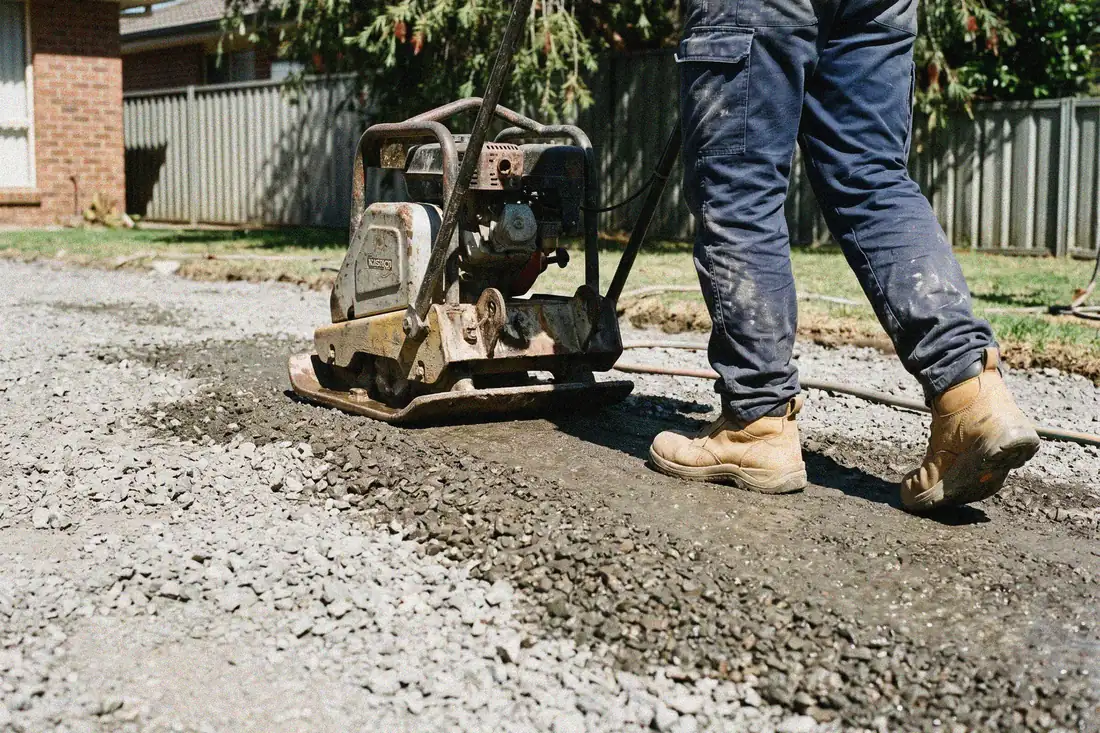
- Spread and compact the crushed rock base with a plate compactor, shaping a slight fall so water runs off.
- Add the levelling layer and screed it smooth.
- Lay the weed membrane, overlapping joins by about 10%.
- Roll out the grass, check every strip’s pile faces the same way, and let it settle for an hour or two.
- Join the strips with joining tape and adhesive, butting the edges tightly.
- Trim the edges with a sharp knife and fix them down.
- Brush in the silica sand against the pile until the blades stand up.
How much do I need for a 6 × 4 m lawn?
| Item | Amount | Calculator |
|---|---|---|
| Synthetic grass | 25.6 m² (one 6.1 m strip from a 4 m roll) | Synthetic grass |
| Road base (7.5 cm) | 1.8 m³, best bought loose from a landscape supplier | Road base |
| Infill sand | 8 × 20 kg bags at 6 kg per m² | Synthetic grass |
| Edging | The perimeter: 20 m for this lawn | Garden edging |
Does synthetic grass get hot?
Yes. In full Australian sun, synthetic grass can get much hotter than natural turf, which matters for bare feet, children and pets. Hosing it down cools it quickly, and shade from trees or sails helps. If heat is a concern, ask suppliers about products designed to run cooler and how they test them.
What mistakes should I avoid?
- Laying straight onto soil, which settles unevenly and lets weeds through.
- Mixing pile directions, so strips look like different colours.
- Ordering by lawn area: plan the strips first.
- No fall in the base, so water pools after heavy rain.
- Skipping the infill, which leaves the grass flat and prone to moving.
Calculators for this job
More guides
 How to build a raised garden bed in Australia
 Crusher dust vs road base: which do you need?
 Colorbond fencing: panels, posts and how much to order
Barrowload guide · Australia · Figures are typical; always check your product and local rules.