Home / Australia calculators / Stone and sand
Road base calculator
Work out road base for paving, paths and driveways. Australian units: metres, centimetres and litres. Results update as you type.
How much road base do I need?
Road base needed = length × width × depth. An area of 4 m × 3 m at 10 cm deep needs 1.2 m³, about 2.52 tonnes. Order 126 × 20 kg bags, or 1.2 m³ of road base from a landscape supplier. The result uses a compacted density, so you don’t need to add extra for compaction.
On this page
Key facts
- Compacted road base weighs about 2.1 tonnes per m³.
- Paths usually need 10 cm compacted; driveways 15 cm or more.
- Landscape suppliers sell road base loose by the tonne or m³.
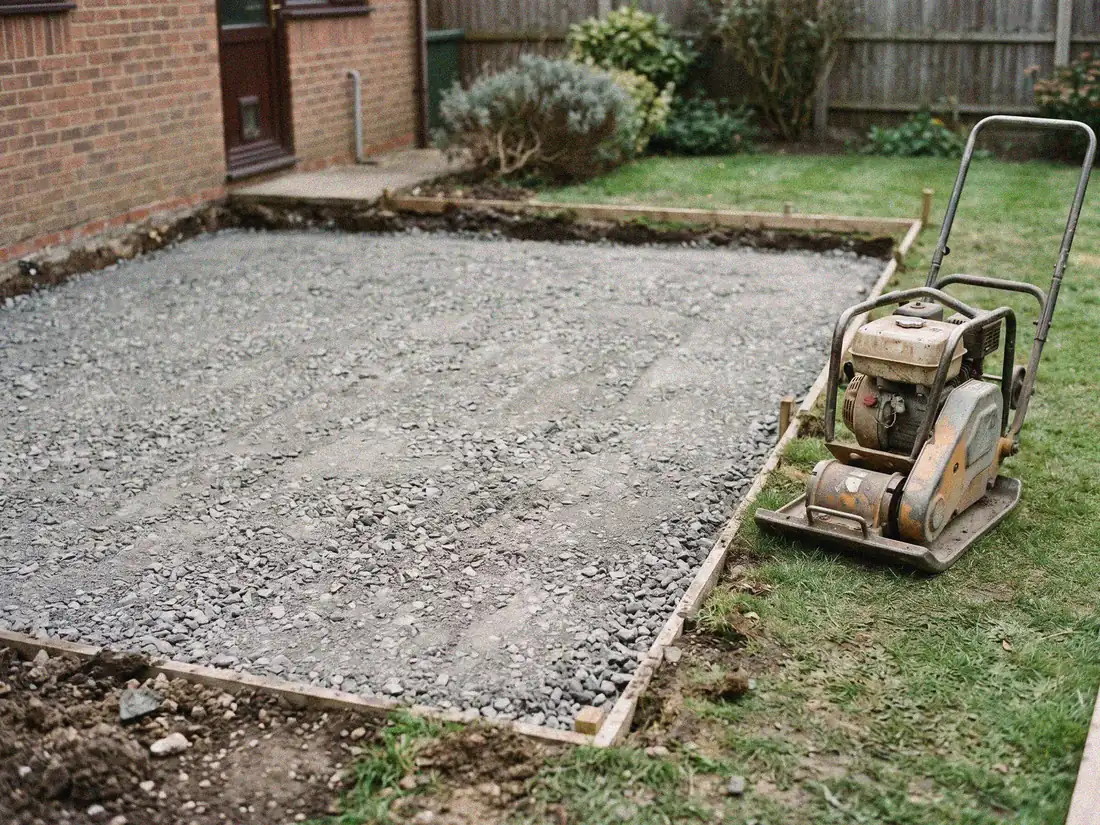
- Compact in layers with a plate compactor.
How deep should the base be?
Depths are measured after compaction. Common minimums on firm ground:
| Project | Compacted depth | Notes |
|---|---|---|
| Paths and patios | 10 cm (100 mm) | Foot traffic |
| Shed and garden structure bases | 10 cm (100 mm) | Under slabs or pavers |
| Driveways | 15 cm (150 mm) or more | Soft or clay ground needs more |
| Synthetic grass base | 5–7.5 cm | Artificial grass calculator |
How far does a tonne go?
If you already know how much you’re ordering, or want to check a delivery, here’s roughly how far road base goes at common depths (at a typical 2.1 t/m³, compacted):
| Amount | at 10 cm | at 15 cm |
|---|---|---|
| 1 tonne | about 5 m² | about 3 m² |
| 5 tonnes | about 24 m² | about 16 m² |
| 10 tonnes | about 48 m² | about 32 m² |
| 20 tonnes | about 95 m² | about 63 m² |
Or enter the amount you have in the Already have some? box in the calculator, and it shows the area covered at your chosen depth.
Buying road base
Road base is a crushed rock blend (often 20 mm down to fines) that compacts into a firm base. Landscape suppliers sell it loose by the cubic metre or tonne, which is much cheaper than 20 kg bags for anything but small jobs. The calculator uses a typical compacted density of 2.1 tonnes per m³.
How to lay it
- Dig out to the depth of the base plus your sand layer and pavers.
- Lay a geotextile fabric on soft ground.
- Spread the base in layers of about 5–7.5 cm.
- Compact each layer with a plate compactor.
- Check levels and slope water away from buildings.
What mistakes should I avoid?
- Measuring loose depth instead of compacted depth.
- Compacting one thick layer instead of several thin ones.
- Too thin a base for driveways.
- Forgetting the excavated soil, which needs somewhere to go.
How is it calculated?
Volume = length × width × depth, with depth converted to metres (cm ÷ 100). Circles, triangles and L-shapes use the matching area formula. Weight = volume × 2.1 t/m³ (compacted). Real densities range from about 2.0 to 2.2. Bags and bulk amounts are rounded up, because you can’t buy part of a bag.
Worked examples
Patio base: 4 m × 3 m at 10 cm deep = 1.2 m³, about 2.52 tonnes. Order 126 × 20 kg bags, or 1.2 m³ of road base from a landscape supplier.
Driveway: 6 m × 3 m at 15 cm deep = 2.7 m³, about 5.67 tonnes. Order 284 × 20 kg bags, or 2.7 m³ of road base from a landscape supplier.
Common questions
How deep should road base be for pavers?
About 10 cm compacted for patios and paths, and 15 cm or more for driveways.
How many tonnes in a cubic metre?
About 2.1 tonnes once compacted.
Do I need to compact it?
Yes. A plate compactor is needed for a firm base; work in thin layers.
Do I need fabric underneath?
On soft or clay ground, a geotextile fabric helps stop the base sinking into the soil.
Bags or bulk?
Bags are fine for small pads; bulk delivery is much cheaper for patios and driveways.
How much will 20 tonnes of road base cover?
About 63 m² at 15 cm deep, at a typical density. See the coverage table for other depths.
How much area does a tonne of road base cover?
About 3 m² at 15 cm deep.