Crusher dust vs road base: which do you need?
Crusher dust and road base come from the same crushed rock, sit side by side at the landscape yard, and are often confused. They do different jobs, and most projects use them in different layers rather than choosing one.
What’s the difference?
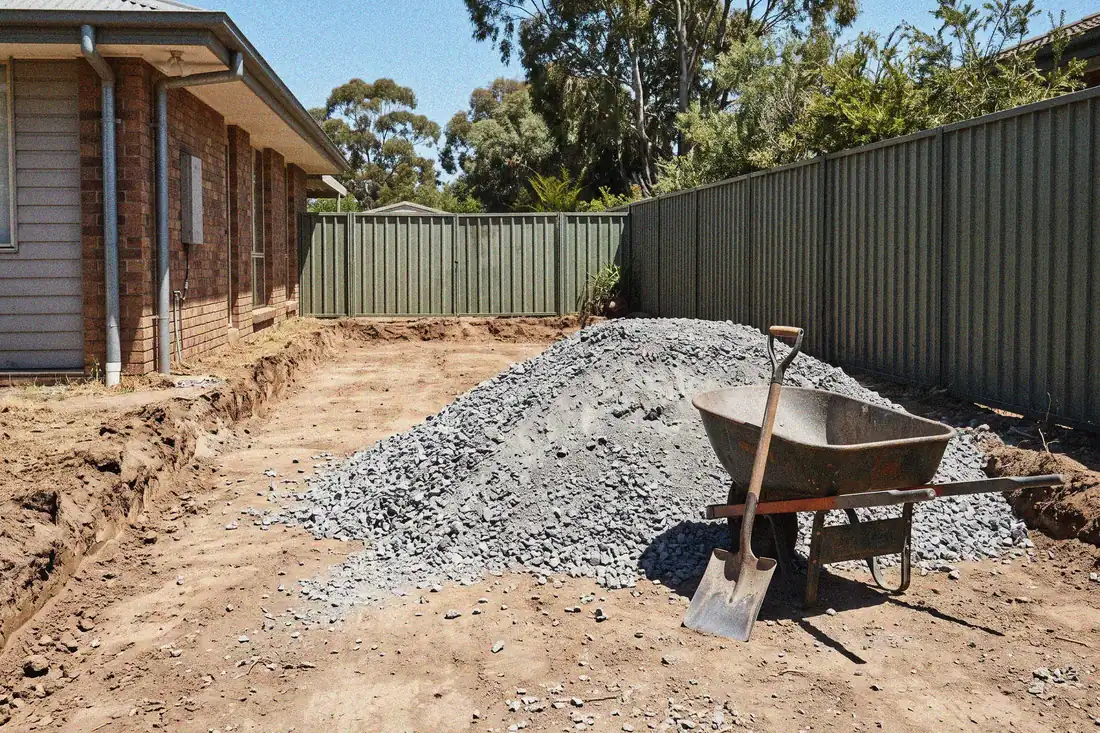
Road base is graded crushed rock, from about 20 mm down to dust, that compacts into a strong load-bearing layer. Crusher dust is a finer material, with a maximum size of about 5 mm, used as a thin, smooth levelling layer on top. Road base carries the weight; crusher dust gives a fine finish.
How do they compare?
| Road base | Crusher dust | |
|---|---|---|
| Particle size | About 20 mm down to dust | About 5 mm down to dust |
| Main job | Load-bearing base layer | Thin levelling layer and packing |
| Typical depth | 10 cm for paths, 15 cm or more for driveways | About 20–40 mm, compacted |
| Used for | Driveways, paths, slab and shed bases | Under synthetic grass, packing around water tanks, some paving |
Which goes where?
| Project | Typical build-up |
|---|---|
| Gravel driveway | Compacted road base, then a crushed rock or gravel topping |
| Synthetic grass | Compacted road base, then a thin compacted layer of crusher dust for a smooth finish |
| Pavers | Compacted road base, then a bedding layer, most often washed paving sand |
| Water tank pad | Commonly crusher dust or road base, compacted and level; follow the tank maker’s instructions |
Pavers on crusher dust: some suppliers warn that laying pavers directly on crusher dust can let its colour come up through the joints, which is one reason washed paving sand is the more common bedding layer.
How much should I order?
Both are sold loose by the cubic metre or tonne, or in 20 kg bags for small jobs. Compacted road base weighs about 2.1 tonnes per m³. Order a little extra for compaction and uneven ground.
| Example | Material | Amount |
|---|---|---|
| Driveway, 12 × 3 m at 15 cm | Road base | 5.4 m³ (road base calculator) |
| Synthetic lawn, 6 × 4 m | Road base at 7.5 cm | 1.8 m³ |
| Synthetic lawn, 6 × 4 m | Crusher dust at 3 cm | About 0.72 m³ |
How do I lay and compact them?
- Excavate and remove soft soil and roots.
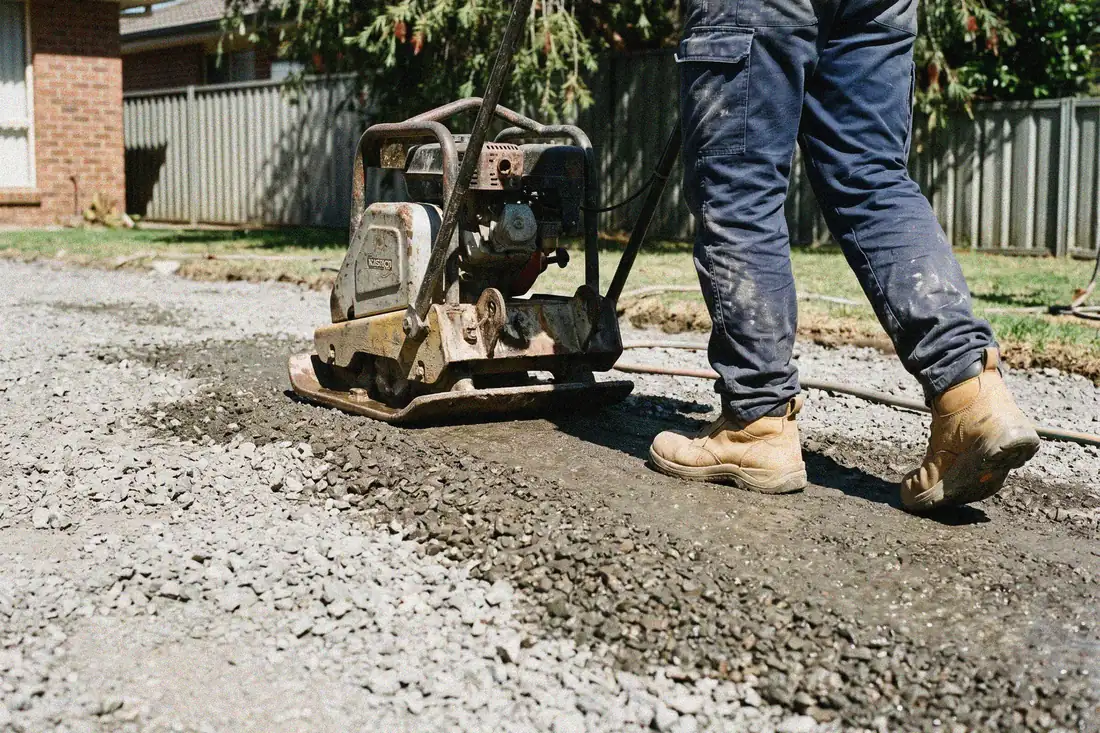
- Spread road base in layers and compact each with a plate compactor, lightly dampening it.
- Check levels and falls before adding the next layer.
- For a fine finish, spread a thin layer of crusher dust, screed it level, then compact.
Do I always need both?
No. A simple path or shed base can be compacted road base alone. Synthetic grass benefits from a crusher dust finishing layer because small bumps in the base show through the grass. Paving usually uses road base under a sand bedding layer. Ask your landscape supplier which grades they stock, since names and gradings vary between yards.
What mistakes should I avoid?
- Using crusher dust as the main base for a driveway: it’s a finishing layer, not a structural one.
- Thick crusher dust layers, which are harder to compact evenly.
- Compacting dry material: a little moisture helps it bind.
- Skipping compaction between layers.
Calculators for this job
More guides
 How to build a raised garden bed in Australia
 How to lay synthetic grass in Australia
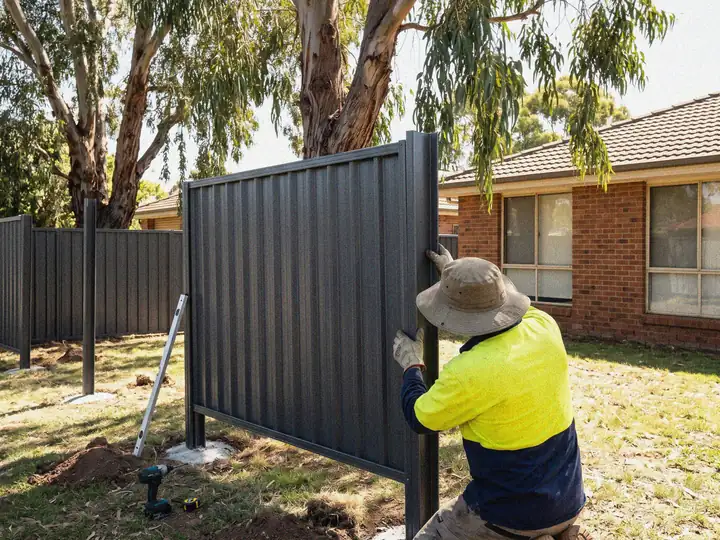 Colorbond fencing: panels, posts and how much to order
Barrowload guide · Australia · Figures are typical; always check your product and local rules.