Bags, ready-mix or on-site mixed concrete? Which to choose (UK)
Once you know how much concrete you need, the next question is how to buy it. The honest answer depends mostly on one number: the volume. Here’s how to decide.
The short version
- Up to about half a cubic metre (post holes, small pads, a small shed base): bagged concrete is usually simplest.
- A known, larger volume (a patio slab, a garage base): ready-mix delivered in a drum truck.
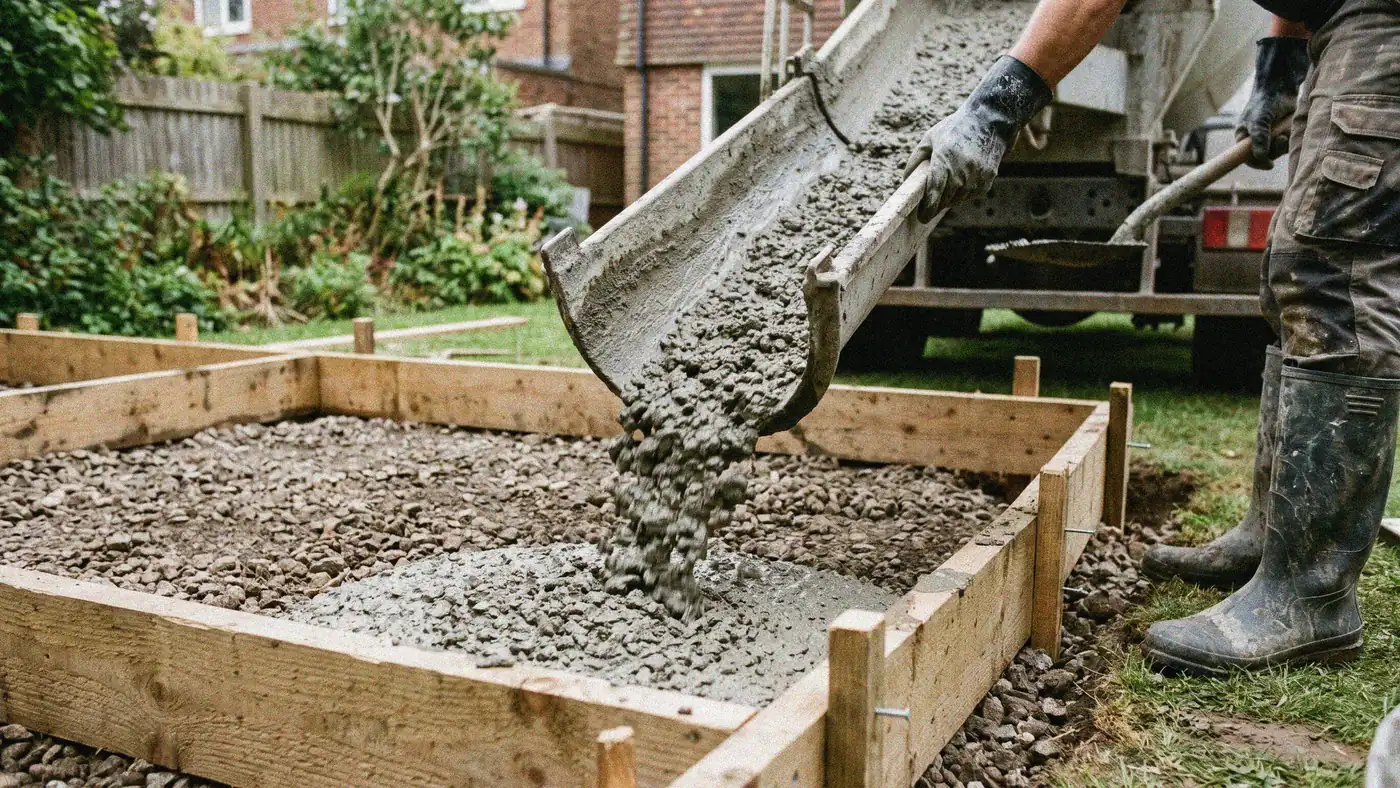
- A volume you're unsure of, or a pour in stages: on-site mixed concrete, where the truck mixes what you use.
Start by working out the volume with the concrete calculator. Everything else follows from that.
Bagged concrete: fine for small jobs, hard work for big ones
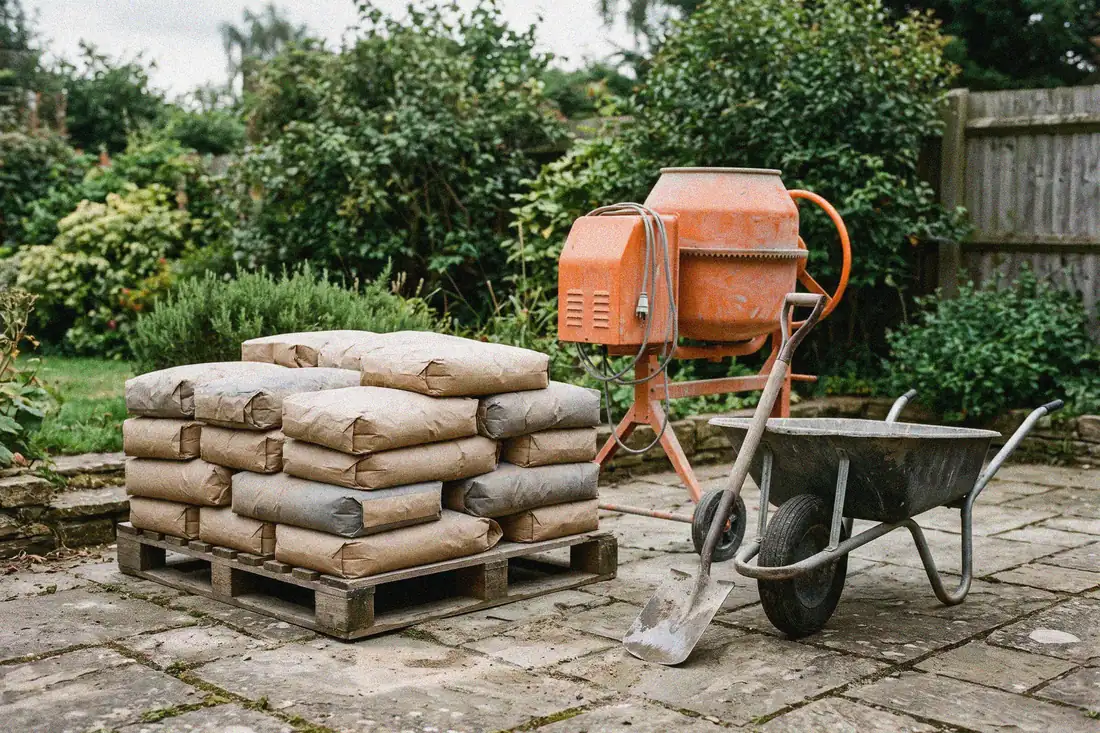
Bags are easy to buy, need no booking and let you work at your own pace. The catch is the sheer weight. A cubic metre of concrete needs roughly 108 × 20 kg bags. That's more than two tonnes to lift, carry, mix and place by hand.
Take a 3 × 2.4 m shed base, 10 cm thick. That's 0.72 m³, or roughly 78 bags. Doable with a mixer and a helper, but it's a long day. Much bigger than this and ordering in becomes far more attractive.
If you'd rather mix from scratch, the ballast and cement calculator works out cement bags and ballast for a given mix ratio.
Ready-mix: best for known, larger volumes
Ready-mix arrives already mixed in a drum truck, so you just place and level it. It's consistent and fast, but you need to order the right amount and be ready when it arrives.
- Order a little extra. Add about 5–10% for uneven ground. Running short mid-pour leaves a weak joint.
- Small loads can cost more. Suppliers often charge extra for part loads, so ask how they price smaller orders.
- Plan the route. If the truck can't reach the pour, you'll need wheelbarrows and helpers, or a concrete pump.
- Have everything ready first: formwork set, sub-base compacted, tools and people on hand.
On-site mixed: pay for what you use
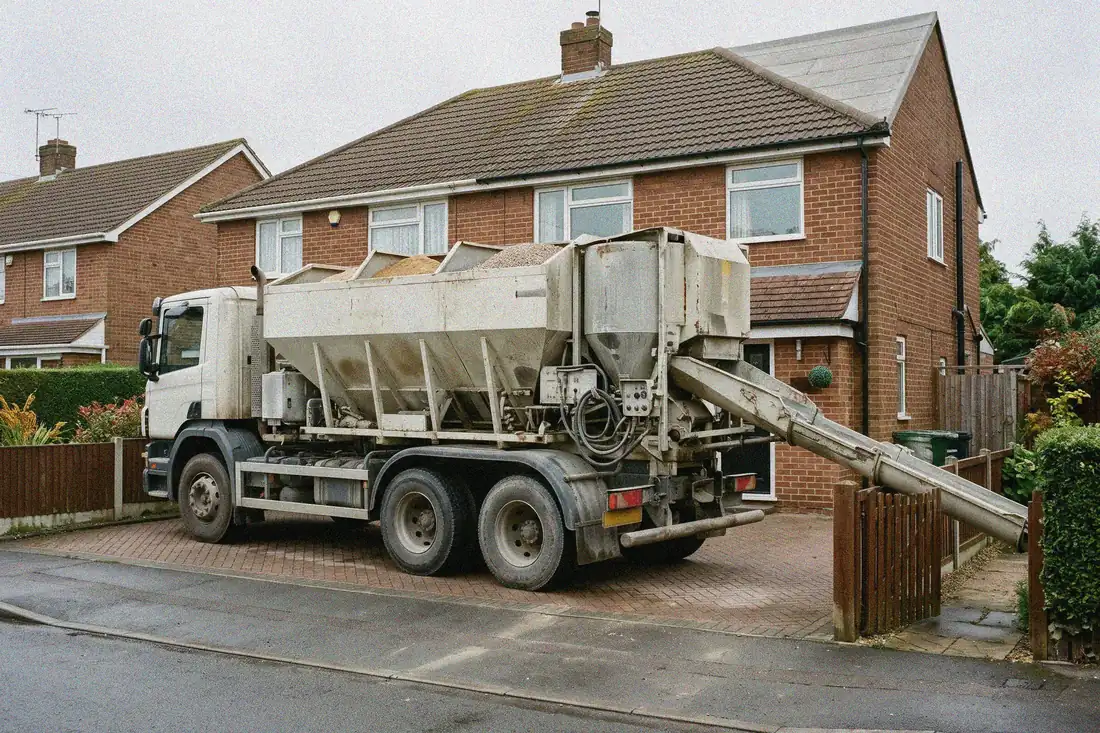
Volumetric mixer trucks carry sand, stone, cement and water separately and mix concrete fresh on your drive. Because they only mix what's needed, they're handy when you're not sure of the exact volume, or when you're pouring several smaller areas. Many charge for what you actually use, though minimum charges are common, so check before booking.
How much concrete do common jobs need?
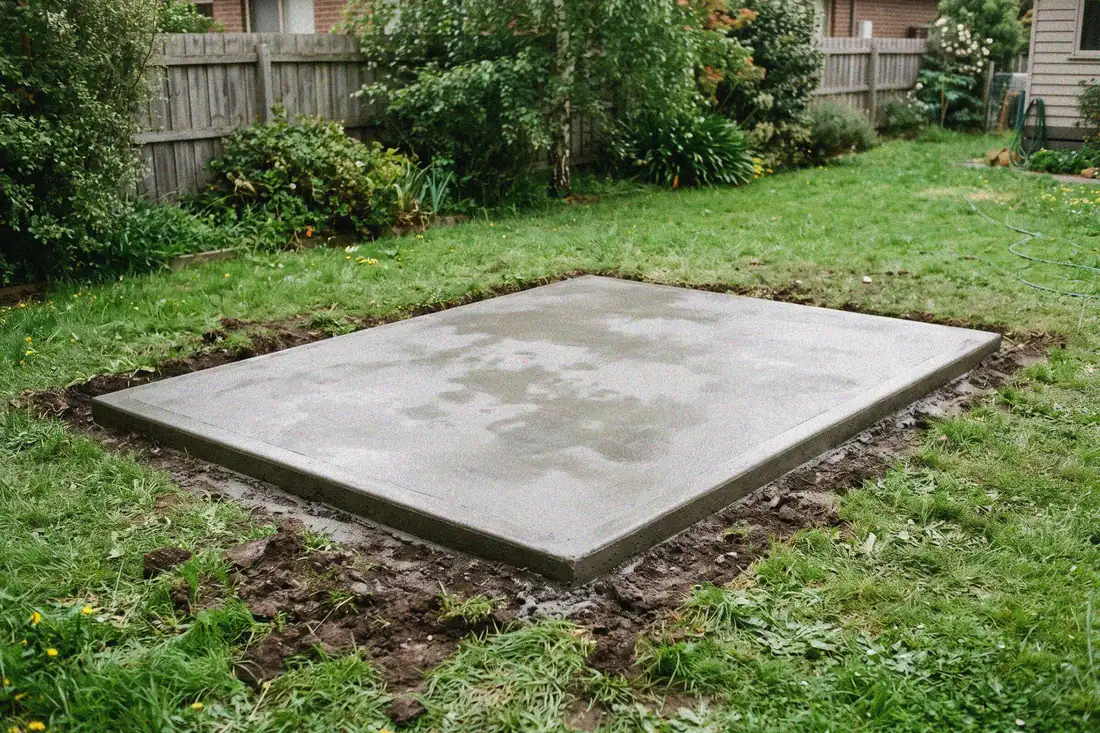
These rough figures help you see which side of the line your job falls on. Your own measurements will differ, so treat them as a starting point.
| Job | Typical size | Volume | 20 kg bags (approx.) | Usually best bought as |
|---|---|---|---|---|
| One fence post hole | 30 × 30 cm, 60 cm deep | 0.05 m³ | 6 | Bags or postcrete |
| Small shed base | 3 × 2.4 m, 10 cm thick | 0.72 m³ | 78 | Bags with a mixer, or on-site mixed |
| Small patio slab | 4 × 3 m, 10 cm thick | 1.2 m³ | 130 | Ready-mix or on-site mixed |
| Single garage base | 6 × 3 m, 15 cm thick | 2.7 m³ | 290 | Ready-mix |
If you do mix it yourself
Hire or borrow a cement mixer for anything beyond a few bags; mixing by hand in a wheelbarrow is slow and it’s hard to keep every batch the same. Get the bags delivered as close to the pour as possible, because each one weighs 20–25 kg. Keep the mix workable rather than sloppy: extra water makes it easier to spread but weaker when it sets. And line up a helper. One person mixing while another places and levels is far quicker than doing both.
Side by side
| Bags | Ready-mix | On-site mixed | |
|---|---|---|---|
| Best for | Under about 0.5 m³ | Known, larger volumes | Unknown or staged volumes |
| Effort | High: lifting and mixing | Low: place and level | Low: place and level |
| Ordering | Buy as you go | Set volume, booked in advance | Mixed to need |
| Watch for | Weight and time | Part-load charges, access | Minimum charges |
Before you order anything
- Measure the area and the depth in several places, as ground is rarely level.
- Compact a sub-base first; see the MOT Type 1 calculator.
- Check the weather. Avoid pouring in frost or heavy rain.
- Plan how you'll keep the slab damp and protected while it cures.
Calculators for this job
More guides
 UK skip sizes explained: what each skip holds
 How to lay turf: a step-by-step UK guide
 How to lay a self-binding gravel path (UK guide)
Barrowload guide · UK · Figures are typical; always check your product and local rules.