How to lay a self-binding gravel path (UK guide)
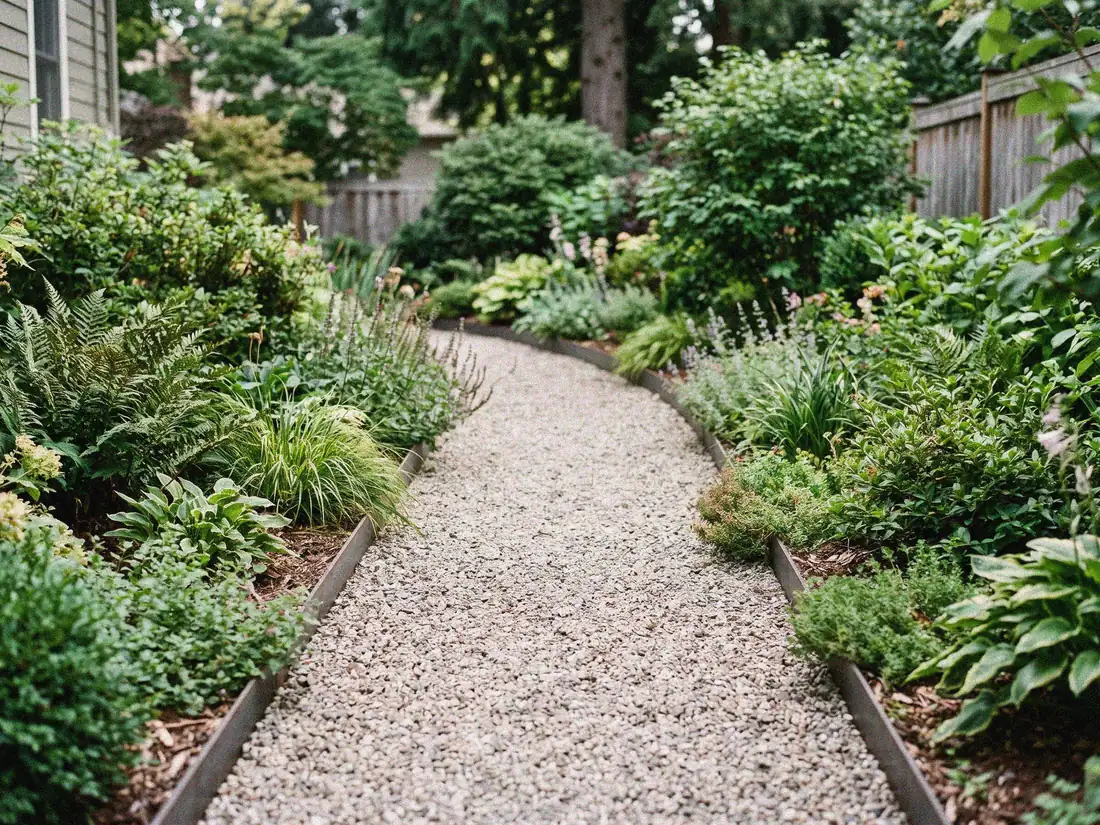
Self-binding gravel gives a firm, natural-looking path that doesn’t scatter like loose gravel. It contains fine particles that lock together when compacted and wetted, but only if it sits on a free-draining sub-base and is laid at the right depth.
How do you lay a self-binding gravel path?
Dig out, lay a membrane on the ground, compact a sub-base (often about 150 mm), then spread self-binding gravel in thin layers and compact it to a finished depth of about 50 mm, with a slight fall for drainage. A 10 m × 1 m path needs about 1 tonne of self-binding gravel and 3.15 tonnes of MOT Type 1.
What goes under self-binding gravel?
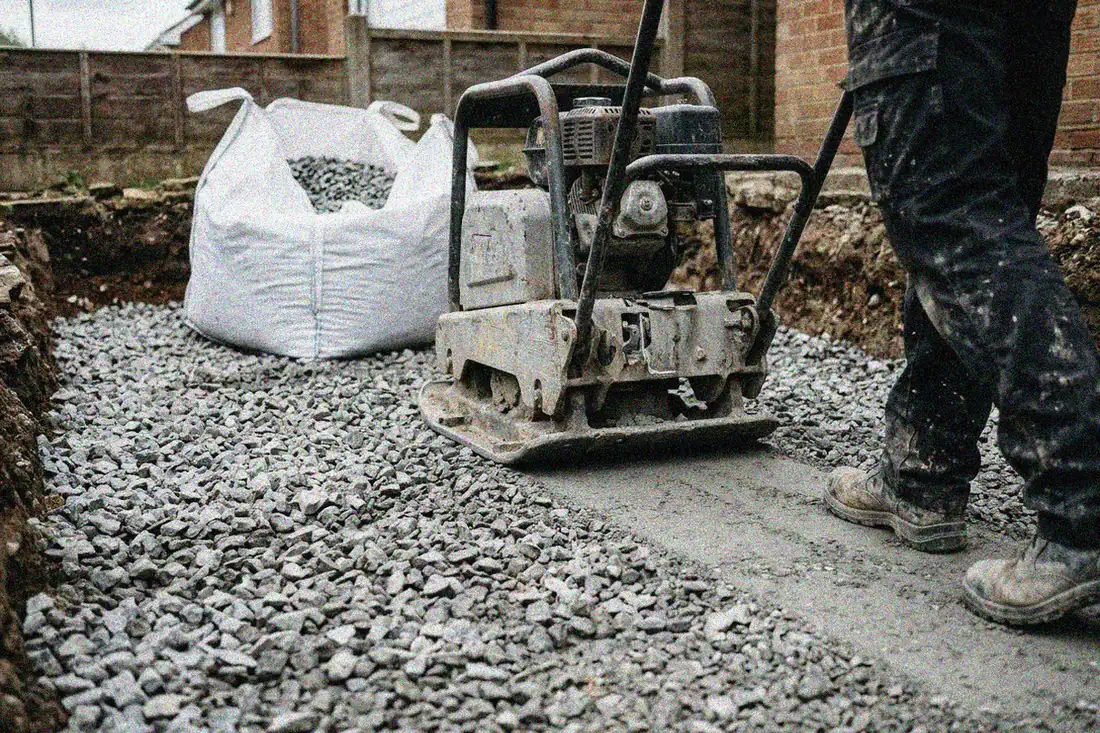
| Layer (bottom to top) | Typical depth | Notes |
|---|---|---|
| Geotextile membrane | — | On the dug-out ground, under the sub-base, not between the sub-base and the gravel |
| Sub-base (MOT Type 1, or free-draining Type 3) | About 150 mm for paths | Manufacturers differ, so follow your product’s instructions |
| Self-binding gravel | About 50 mm compacted | Thicker layers tend to stay loose on top |
How do I lay it, step by step?
- Mark out the path and fit edging (timber, steel or brick) to hold the material in.
- Dig out to allow for the sub-base and gravel.
- Lay the membrane on the ground.
- Spread and compact the sub-base in layers, with a fall of about 1 in 50 so water runs off.
- Spread the self-binding gravel in thin layers, raking each level.
- Lightly dampen and compact each layer with a plate compactor or roller until firm.
- Let it settle, and keep heavy use off it for the first few days.
How much self-binding gravel do I need?
It weighs about 2 tonnes per m³ once compacted. At 50 mm, a tonne covers roughly 8–10 m², depending on the product and how much you allow for waste. Work out your path with the gravel calculator, choosing “Self-binding path gravel”.
| 10 m × 1 m path | Amount | Calculator |
|---|---|---|
| Self-binding gravel (50 mm compacted) | About 1 tonne: 40 × 25 kg bags or a bulk bag | Gravel |
| MOT Type 1 sub-base (150 mm) | About 3.15 tonnes: 4 bulk bags of 0.85 t | MOT Type 1 |
| Edging | 20 m (both sides) | Lawn edging |
How do I look after it?
- Rake and re-compact any loose or soft patches.
- Top up worn areas with a thin, compacted layer.
- Avoid de-icing salt, which can break down the bond.
- Keep drainage working: waterlogging is the main cause of soft, muddy patches.
Can I use self-binding gravel for a driveway?
Some products are rated for driveways, usually with a deeper compacted layer (at least one manufacturer specifies 75 mm for vehicles) and a stronger sub-base. Check that your chosen product is suitable for vehicles and follow its installation guide; on steep slopes or tight turning areas, loose gravel in a gravel grid can be a more forgiving choice.
What mistakes should I avoid?
- Laying it too deep: much over 50 mm and the surface stays loose.
- Membrane in the wrong place: it goes under the sub-base.
- No fall, so water sits in the path.
- Compacting it bone dry: it needs a little moisture to bind.
Calculators for this job
More guides
 UK skip sizes explained: what each skip holds
 How to lay turf: a step-by-step UK guide
 How to fill a deep raised bed cheaply: soil layering (UK)
Barrowload guide · UK · Figures are typical; always check your product and local rules.