UK skip sizes explained: what each skip holds
Skip sizes in the UK are measured in cubic yards, the amount of waste a skip holds, not its length. Picking the right size depends on how much waste you have, and for garden jobs, how heavy it is.
What size skips are there?
The most common UK skips are mini (2–3 yards), midi (4–5 yards), small builder’s (6 yards) and builder’s (8 yards), with larger maxi and roll-on roll-off skips for bulky waste. One cubic yard is about 0.76 m³. For soil and rubble, weight usually fills a skip before space does, so heavy waste generally goes in skips of 8 yards or less.
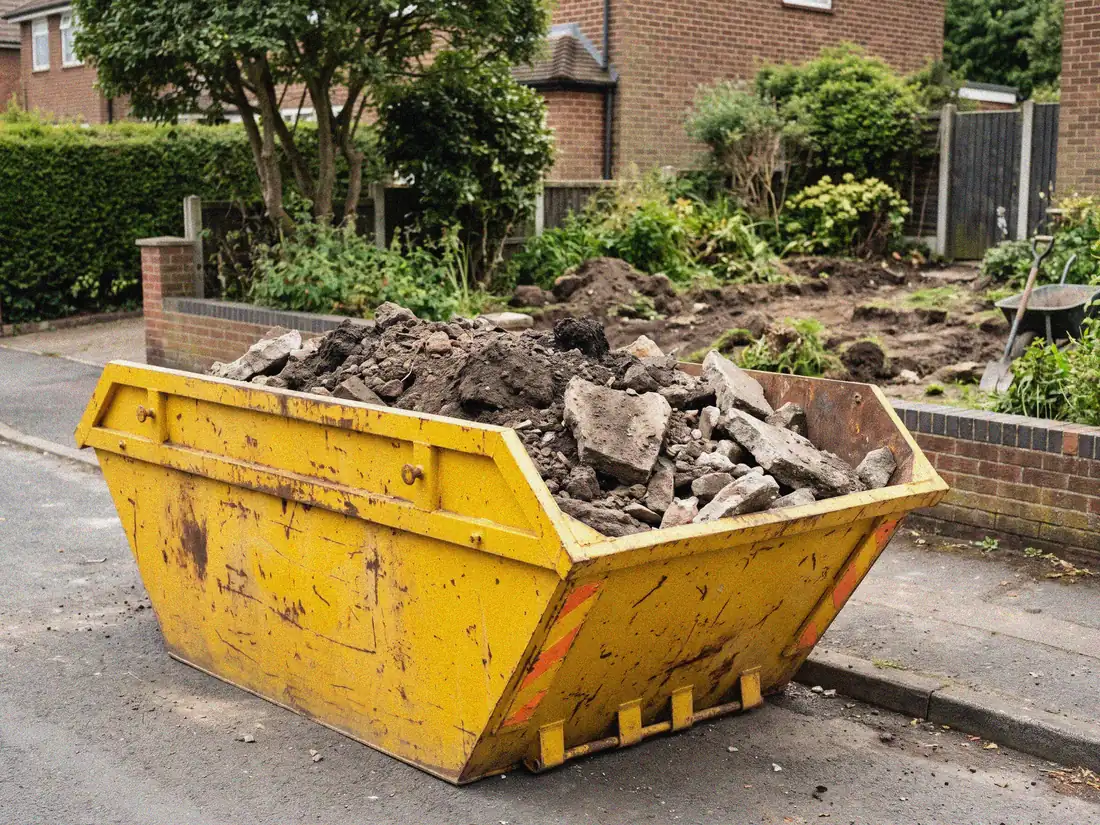
How much does each skip size hold?
| Skip | Size | Roughly holds | Typical use |
|---|---|---|---|
| Mini | 2–3 yards | 20–30 bin bags | Small garden or household clear-outs |
| Midi | 4–5 yards | 30–45 bin bags | Bathroom refits, small garden jobs |
| Small builder’s | 6 yards | 50–60 bin bags | Kitchen refits, medium garden jobs |
| Builder’s | 8 yards | 60–80 bin bags | The most popular size; larger renovations |
| Maxi | 12 yards | 100–120 bin bags | Light, bulky waste only |
| Roll-on roll-off | 20–40 yards | Hundreds of bags | Large commercial clearances |
Bin bag figures are rough guides, and exact dimensions vary between hire companies, so check before you book.
Which skip do I need for soil and rubble?
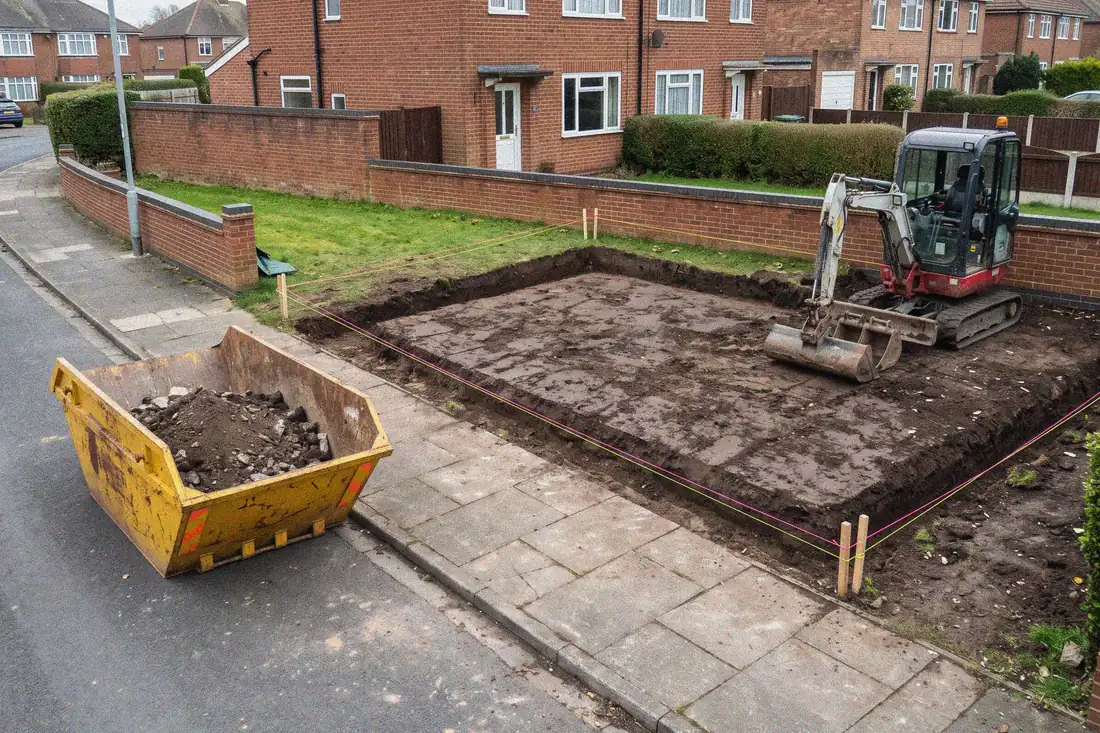
Soil, rubble and concrete are heavy, so most companies only accept them in skips of 8 yards or smaller, and each skip has a weight limit. Dug soil also takes up more space than it did in the ground: it bulks up by roughly 12–30%, and broken concrete by about 60%.
Example: digging out 5 × 4 m of topsoil 15 cm deep gives 3 m³ in the ground, about 3.75 m³ (4.9 cubic yards) once dug, weighing about 4.4 tonnes. That’s one 6 yard skip, if the company’s weight limit allows it. The skip size calculator works this out for your own job.
Do I need a permit for a skip?
If the skip goes on your driveway or private land, you usually don’t. If it goes on the road or pavement, you need a permit from your local council, and the skip must be lit and marked. Most hire companies arrange the permit for you, but check who’s responsible and allow time for it.
What can’t go in a skip?
Rules vary between companies, but these are commonly refused or charged extra: hazardous waste (such as asbestos, paint, chemicals and gas bottles), electrical appliances, batteries and tyres. Plasterboard often has to be kept separate. Ask your hire company for its list before you fill the skip.
How can I get the most out of a skip?
- Break down bulky items and fill gaps with smaller waste.
- Keep heavy and light waste separate if your company charges them differently.
- Don’t overfill: waste must sit level with the top, or the skip may not be collected.
- Book the right size first time: a second skip usually costs more than going one size up.
Calculators for this job
More guides
 How to lay turf: a step-by-step UK guide
 How to lay a self-binding gravel path (UK guide)
 How to fill a deep raised bed cheaply: soil layering (UK)
Barrowload guide · UK · Figures are typical; always check your product and local rules.