How to lay turf: a step-by-step UK guide
Laying turf gives you a usable lawn in weeks rather than months. Most of the work, and most of the result, comes from preparing the ground properly before the first roll goes down.
How do you lay turf?
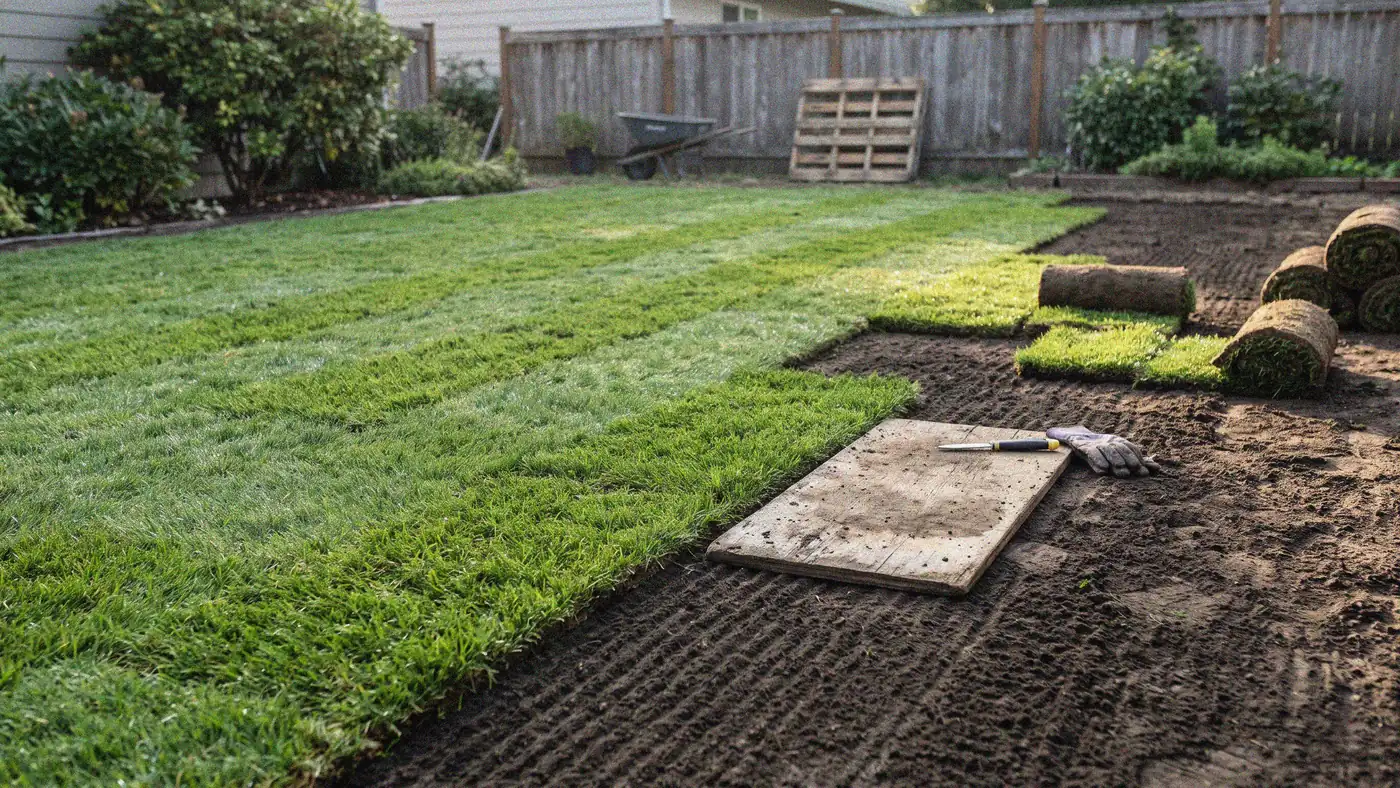
Clear the area, dig or rotavate the soil, add topsoil where needed, then level, firm and rake it to a fine finish. Lay the turf within about a day of delivery, starting from a straight edge and staggering the joints like brickwork, then water it thoroughly and keep it moist until it roots. A 6 × 4 m lawn needs about 26 rolls of turf (1 m² rolls, with 5% extra).
When is the best time to lay turf?
Autumn and spring are usually best in the UK: the soil is warm and moist, so new turf roots quickly with less watering. You can lay turf at other times, but avoid frozen or waterlogged ground, and in hot, dry spells be ready to water every day.
What do I need to lay turf?
| Item | Why |
|---|---|
| Turf (usually 1 m² rolls) | Order 5–10% extra for cuts and curves |
| Topsoil | To level dips or build up poor soil; often 10–15 cm under a new lawn |
| Spade or rotavator, rake | To loosen and level the soil |
| Wide plank | To stand on so you don’t dent the new turf |
| Sharp knife or half-moon edger | For trimming edges and curves |
| Hose or sprinkler | New turf needs plenty of water |
How do I prepare the ground for turf?
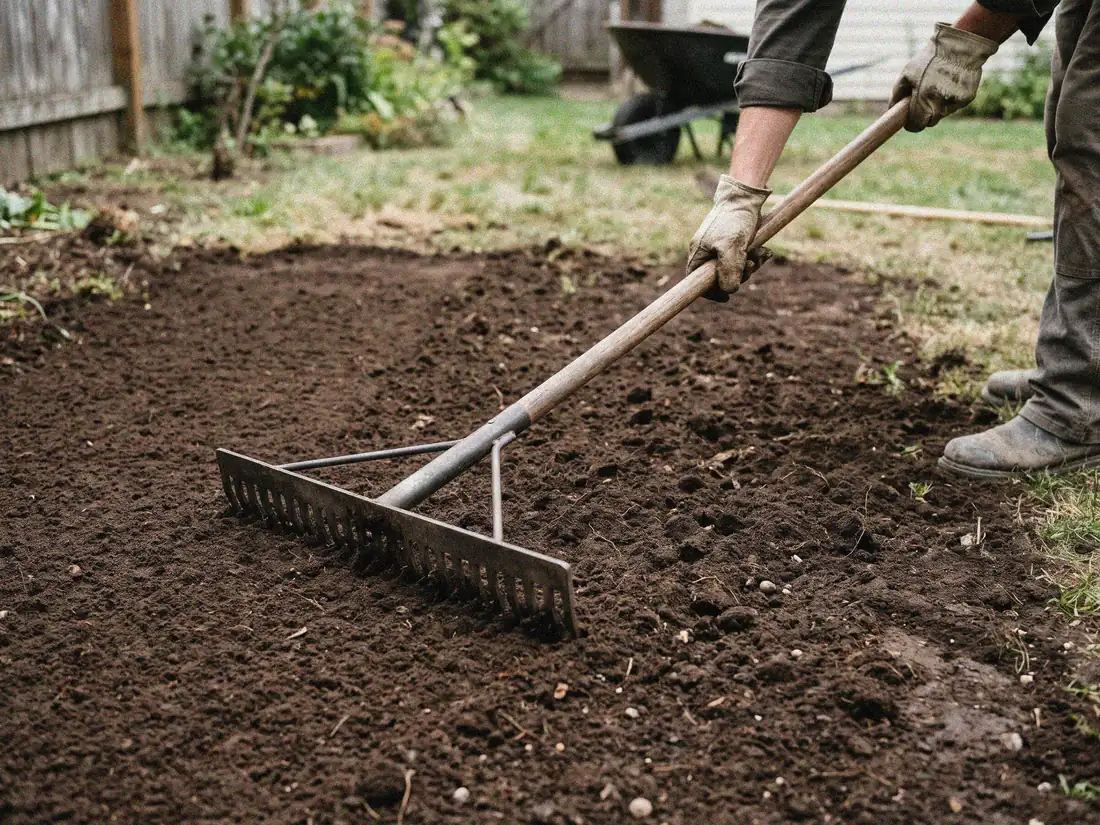
- Clear the area of old grass, weeds, stones and roots.
- Dig or rotavate the soil to loosen it, breaking up compacted patches.
- Add topsoil where the ground is low or poor. Work out how much with the topsoil calculator.
- Level and firm the soil by treading it evenly with your heels, then rake to a fine, level surface.
- Rake in a pre-turf fertiliser if you’re using one, following the pack instructions.
How do I lay the turf?
- Start along a straight edge, such as a path or a string line, and roll out the first row.
- Stagger the joints like brickwork on the next row, butting the edges tightly together without overlapping.
- Kneel or stand on a plank on the turf you’ve just laid, not on the prepared soil.
- Avoid small pieces at the edges: use full or half rolls at the edge and fit smaller pieces further in, where they hold better.
- Trim curves and edges with a sharp knife.
- Lightly firm the turf down so the roots make good contact with the soil.
How do I look after new turf?
- Water straight away, soaking through the turf into the soil below.
- Keep it moist until it roots, usually a couple of weeks depending on the weather. If the edges shrink or gaps appear, it needs more water.
- Keep off it as much as possible until it has rooted. Gently lift a corner: if it resists, roots are forming.
- First mow once it has rooted, on a high setting, then lower the height gradually over the following cuts.
How much turf and topsoil do I need?
| 6 × 4 m lawn | Amount | Calculator |
|---|---|---|
| Turf (1 m² rolls, 5% extra) | 26 rolls | Turf |
| Topsoil at 10 cm | 96 × 25 L bags, or 5 bulk bags of 0.5 m³ | Topsoil |
| Lawn edging | The perimeter: 20 m | Lawn edging |
Roll sizes vary between suppliers, so check yours and enter it in the turf calculator.
What mistakes should I avoid when laying turf?
- Leaving rolls stacked for more than a day, which yellows the grass.
- Skipping ground preparation: bumps and hollows show through the new lawn.
- Gaps between rolls, which dry out and let weeds in.
- Under-watering in the first couple of weeks, the most common reason new turf fails.
Calculators for this job
More guides
 UK skip sizes explained: what each skip holds
 How to lay a self-binding gravel path (UK guide)
 How to fill a deep raised bed cheaply: soil layering (UK)
Barrowload guide · UK · Figures are typical; always check your product and local rules.