Home / UK calculators / Lawn
Lawn edging calculator
Work out lawn edging and fixing pins for borders and paths. UK units: metres, centimetres and litres. Results update as you type.
How much lawn edging do I need?
Pieces = edge length ÷ length of one piece, plus extra for curves. 20 m of edges: Order 21 pieces of edging and about 21 stakes or pins. Add one or two spare pieces for curves and cuts.
On this page
Key facts
- Measure curves with a hose or string, then straighten it to measure.
- Add about 5–10% for curves and cuts.
- Stakes or pins = edge length ÷ spacing + 1.
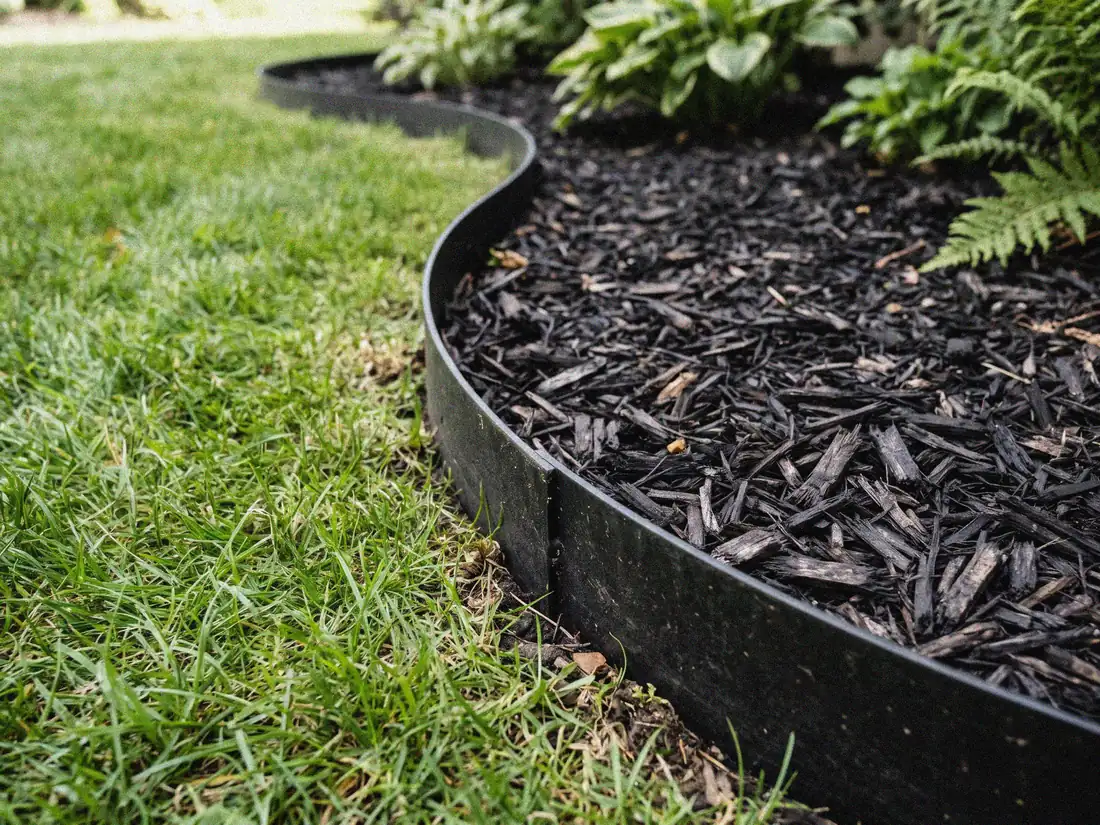
- Flexible plastic or thin steel suits curves best.
Types of edging
| Type | Best for |
|---|---|
| Flexible plastic | Curves and budget jobs |
| Steel or aluminium | Clean, long-lasting lines and gentle curves |
| Timber | Straight edges and raised borders |
| Brick or stone | Formal edges and mowing strips |
How to measure curves
Lay a hose or string along the curve, mark the ends, then straighten it and measure. Add the lengths of every edge together.
Installing edging
- Mark the line with string or a hose.
- Cut a narrow trench along the line.
- Set the edging in, with the top just above soil level.
- Fix it with the stakes or pins.
- Backfill and firm the soil on both sides.
Mowing strips
A flush edge of bricks, pavers or metal set level with the lawn lets the mower wheels run along it, so you don’t need to trim the edge by hand. It takes more work to install but saves time every time you mow.
What mistakes should I avoid?
- Measuring curves as straight lines.
- Too few stakes, so edging lifts.
- Setting it too high, catching mowers.
- No spare pieces for cuts.
How can I save time and money?
- Buy edging in lengths that suit your longest straight runs to reduce joins.
- Keep offcuts for small beds and repairs.
- Edge in moist, not dry, soil; it’s far easier to dig.
- A half-moon edger or spade gives a cleaner trench than a fork.
- Check whether the product includes stakes before buying them separately.
How is it calculated?
Pieces = length × (1 + extra) ÷ piece length, rounded up. Stakes = length ÷ spacing + 1.
Worked examples
Border edge: 20 m: Order 21 pieces of edging and about 21 stakes or pins. Add one or two spare pieces for curves and cuts.
Small bed: 12 m: Order 13 pieces of edging and about 13 stakes or pins. Add one or two spare pieces for curves and cuts.
Common questions
How do I measure a curved edge?
Lay a hose or string along it, then measure the string straight.
How many stakes do I need?
Follow the product guidance; the calculator uses your spacing plus one.
Which edging is best for curves?
Flexible plastic or thin steel edging bends most easily.
How deep should edging go?
Follow the product instructions; most sits slightly above soil level.
Does edging stop grass spreading?
Deep edging helps, but some grasses still creep underneath; regular trimming helps.
Is metal edging better than plastic?
Metal is more rigid and long-lasting, with a crisp line; plastic is cheaper and easier to bend into tight curves.
Can I use edging for gravel paths?
Yes. Edging stops gravel spreading into lawns and beds; set it slightly above the gravel surface.