How to lay a gravel driveway (UK guide)
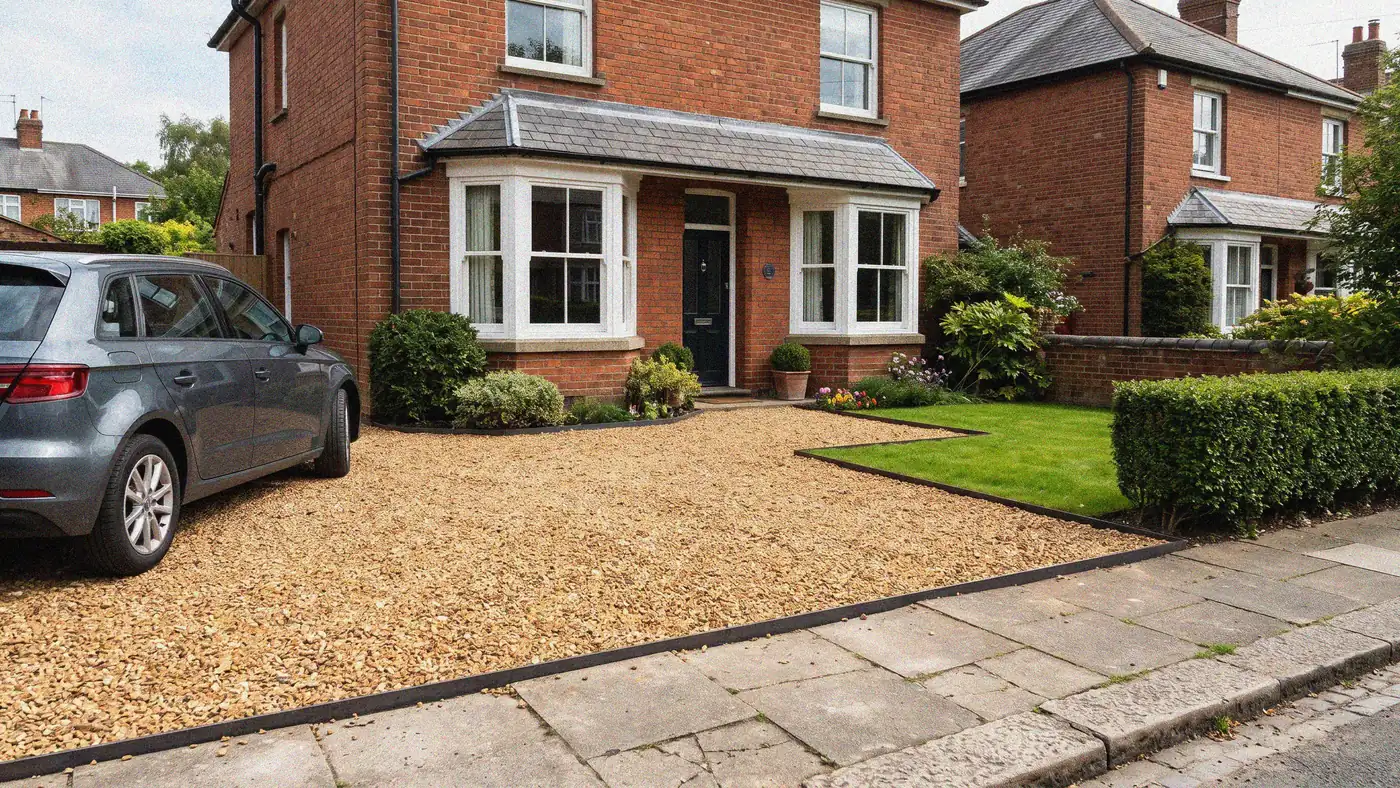
A gravel drive is one of the few big garden jobs you can realistically do yourself. Most of the work is in the bit nobody sees: the dig and the sub-base. Get those right and the gravel is the easy part.
The short version
Dig out about 20 cm, lay a membrane, put down 15 cm of MOT Type 1 and compact it properly, fix your edging, then spread 4–5 cm of angular 20 mm gravel. For a typical 6 × 3 m single drive, that's roughly 5.7 tonnes of Type 1 and 1.5 tonnes of gravel, plus a skip for the soil you dig out.
Before you dig: three things to check
Planning rules. In England, you don't usually need planning permission to surface a front garden if the surface is permeable, which gravel is. Wales, Scotland and Northern Ireland have their own rules, so check with your council if you're not in England.
Dropped kerb. If you're creating a new way onto the road, you'll need your council's permission for a dropped kerb. That's separate from the driveway itself and can take a while, so start early.
Where the water goes. Gravel drains well, but the ground underneath still needs somewhere to send water. Slope the base slightly away from the house, and don't build it up above your damp-proof course.
What goes into a gravel driveway
| Layer | Typical depth | What it does |
|---|---|---|
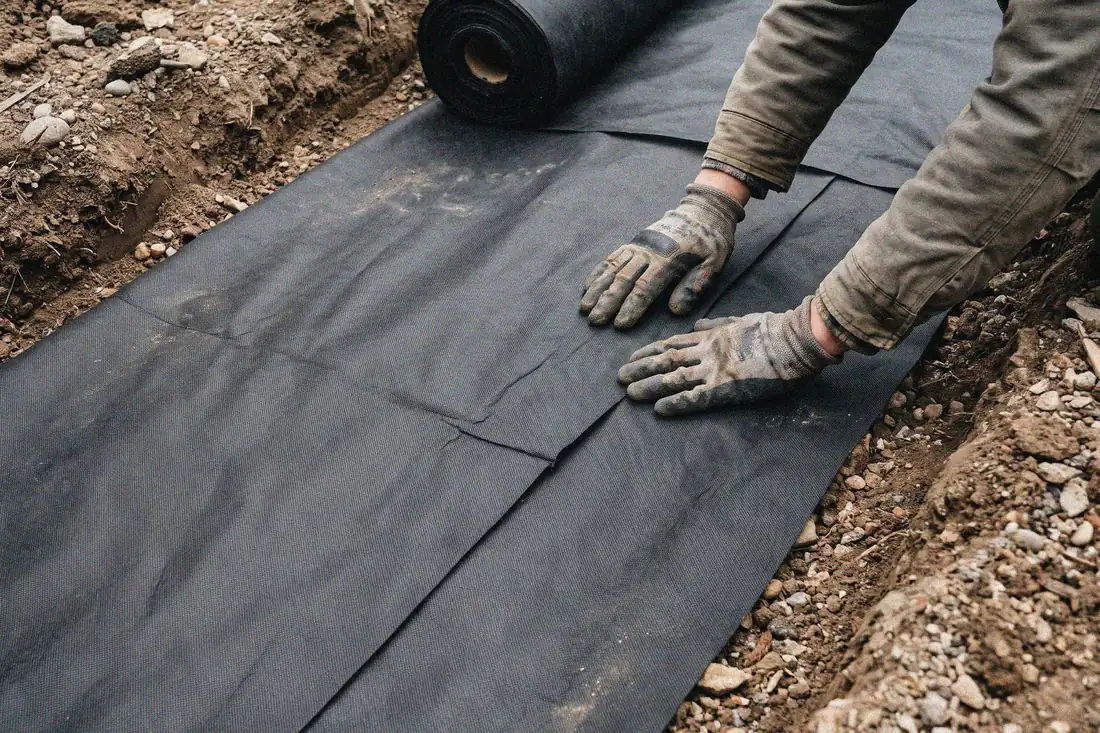
| Geotextile membrane | — | Stops the sub-base sinking into the soil and keeps weeds down |
| MOT Type 1 sub-base | 15 cm (150 mm), compacted | The real strength of the drive: it carries the weight of the car |
| Edging | Set at finished height | Holds everything in place so gravel doesn’t migrate onto the lawn or pavement |
| Gravel | 4–5 cm | The surface you see and drive on |
People often ask whether they can skip the sub-base and just put down more gravel. You can, but it won't last. Without a compacted base, tyres push the gravel into the soil and you end up with ruts and puddles within a winter or two.
Worked example: a 6 × 3 m single drive
Here's what a standard single drive needs, using the same figures as our calculators:
| Item | Calculation | Amount |
|---|---|---|
| Dig out | 6 × 3 m × 20 cm deep | 3.6 m³ of soil, about 5.2 tonnes |
| Skip for the spoil | Soil bulks up by about 25% once dug | One 6-yard skip (about 4.5 m³ loose) |
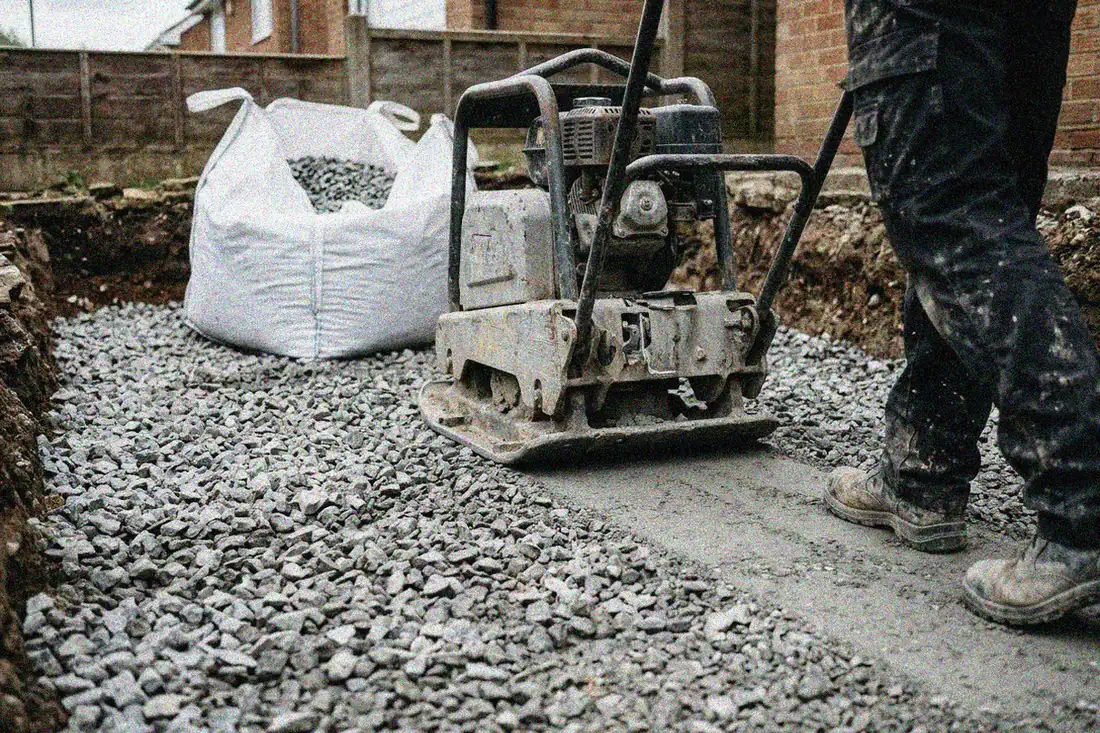
| MOT Type 1 | 6 × 3 m × 15 cm × 2.1 t/m³ | About 5.7 tonnes (seven 0.85 t bulk bags) |
| 20 mm gravel | 6 × 3 m × 5 cm × 1.7 t/m³ | About 1.5 tonnes (two 0.5 m³ bulk bags) |
Your own numbers will differ, so use the MOT Type 1 calculator, the driveway gravel calculator and the skip size calculator with your measurements. Measure in a few places, because very few front gardens are perfect rectangles.
Step by step
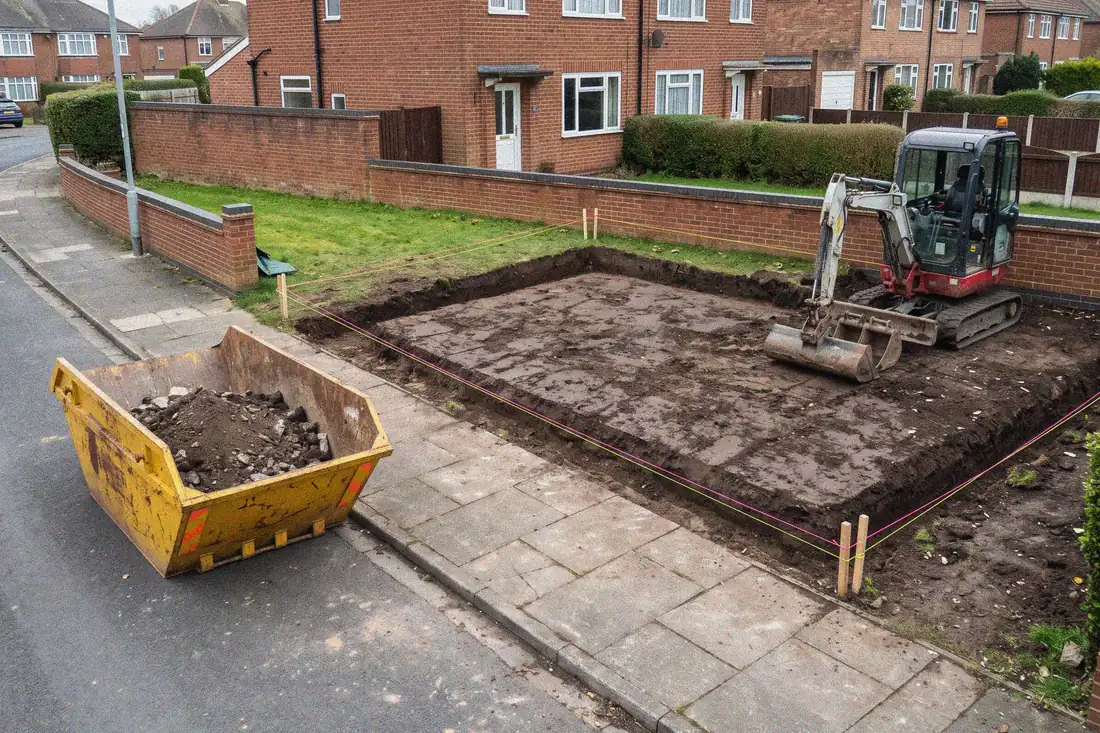
- Mark out the area with string lines and spray paint. Check the width works for opening car doors, not just for the car itself.
- Dig out to about 20 cm. On a drive this size it's a lot of soil, so many people hire a mini digger for a day. Plan where the skip goes before the digging starts.
- Fix the edging. Concrete kerbs, timber boards or steel edging all work. Set them at the finished gravel height.
- Lay the membrane, overlapping the joins by about 30 cm.
- Spread and compact the Type 1 in layers of about 5–7.5 cm, using a plate compactor from a hire shop. Several thin layers compact far better than one thick one.
- Spread the gravel evenly to 4–5 cm and rake it level. If the drive slopes, consider plastic gravel grids, which stop the stones drifting downhill.
Choosing the gravel
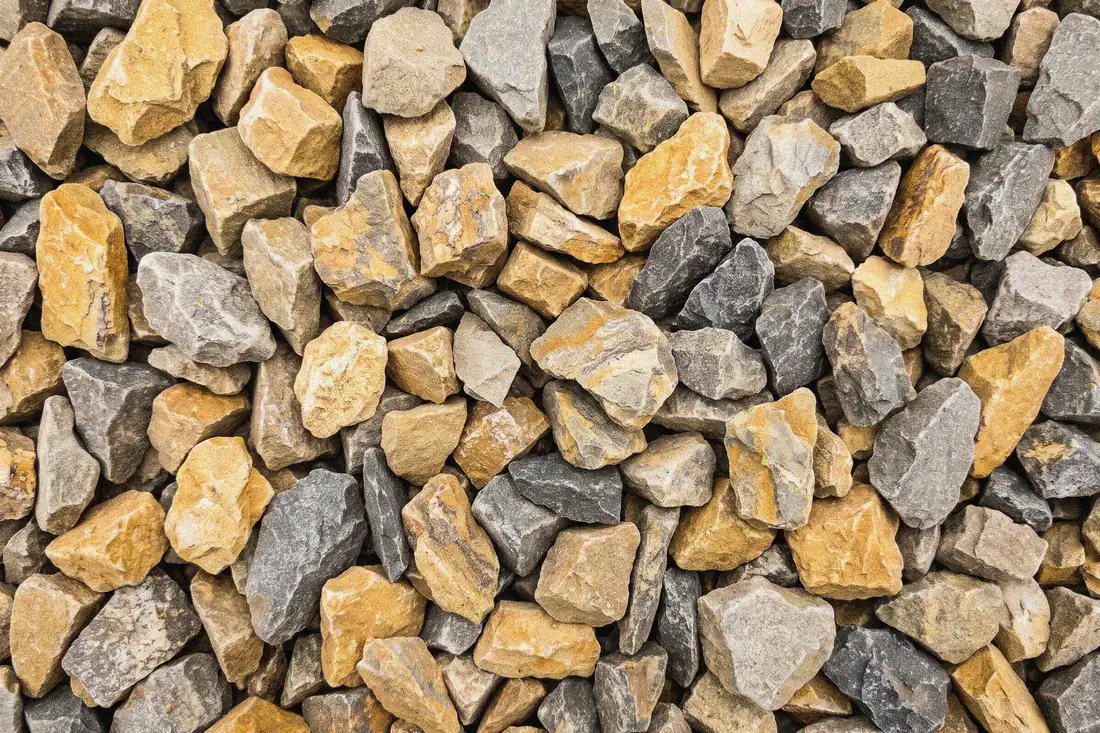

Go for angular gravel around 20 mm. The sharp edges lock together, so it moves less under tyres and feels firmer to walk on. Small round pea shingle looks lovely but rolls around, especially on slopes, and gets carried into the house on shoes.
Resist the urge to go deeper than about 5 cm. It seems generous, but a thick layer of loose gravel is hard to drive on and harder to walk on.
Mistakes worth avoiding
- Measuring the sub-base loose instead of compacted. Type 1 loses a good chunk of height when you compact it, which is why we calculate by compacted weight.
- Forgetting the spoil. The soil you dig out takes up more room than you'd think, and skips have weight limits for heavy waste.
- No edging. Gravel always wanders. Edging is what keeps the drive looking neat.
- Booking deliveries before the dig is done. Bulk bags need somewhere to sit, and you don't want them in the way of the digger.
Looking after it
A gravel drive is low maintenance, not no maintenance. Rake it level every few months, pull the odd weed, and expect to top up the gravel every few years as it settles and spreads.
Calculators for this job
More guides
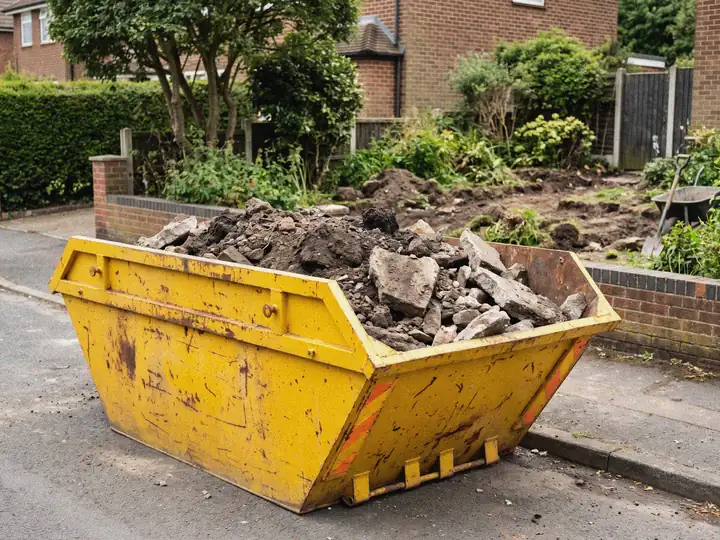 UK skip sizes explained: what each skip holds
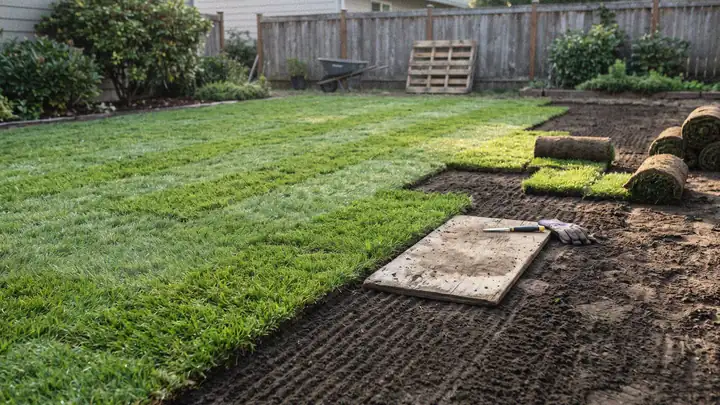 How to lay turf: a step-by-step UK guide
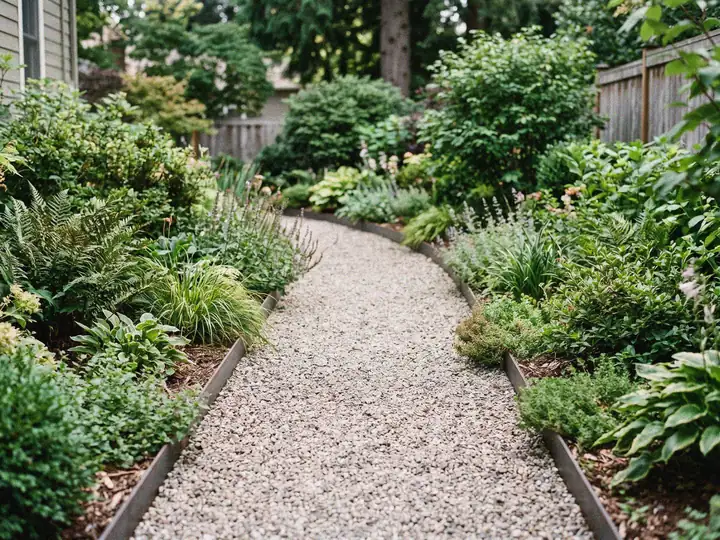 How to lay a self-binding gravel path (UK guide)
Barrowload guide · UK · Figures are typical; always check your product and local rules.