How to fill a deep raised bed cheaply: soil layering (UK)
Filling a deep raised bed with bought soil gets expensive fast. Layering the bottom with free organic material, and keeping the top layer as good soil, can roughly halve what you buy without hurting your crops.
How do you fill a deep raised bed cheaply?
Fill the bottom with free organic material (logs and branches, upturned turf, cardboard and garden waste), then add at least 25–30 cm of good topsoil and compost on top. For a 2.4 × 1.2 m bed, 60 cm deep, that cuts the bought soil from 35 × 50 L bags to 18.
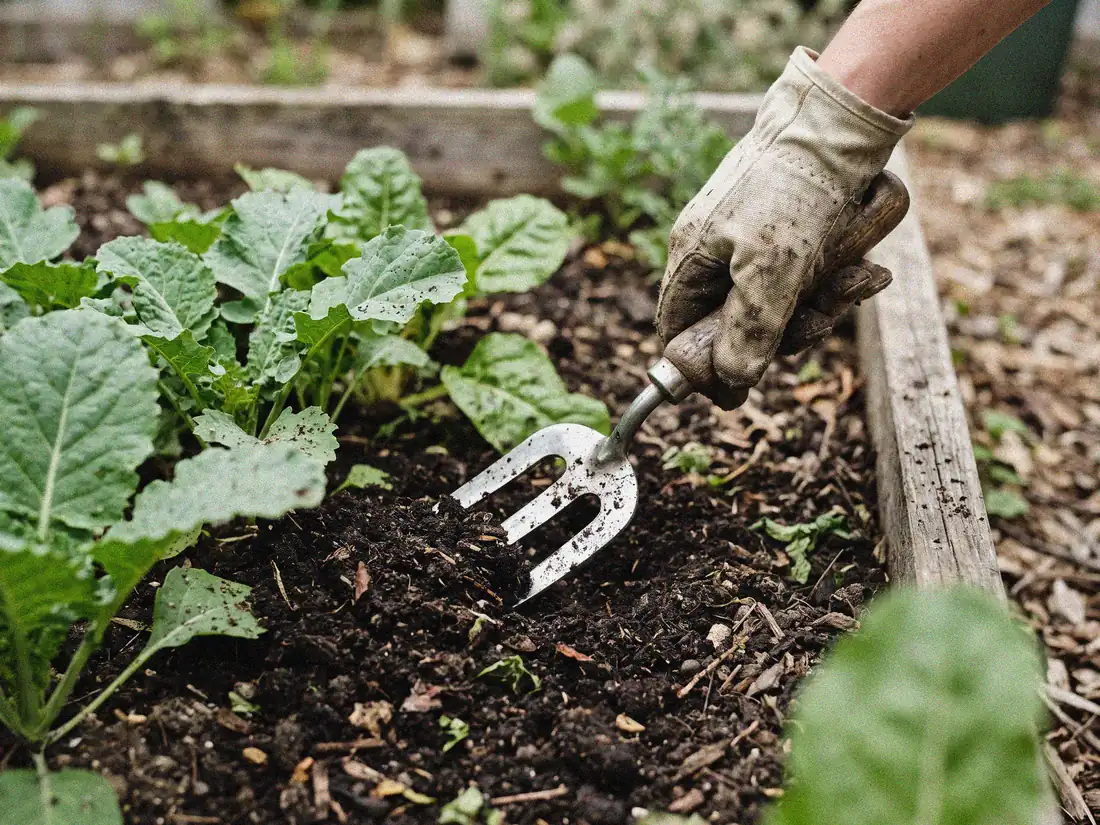
What goes in each layer?
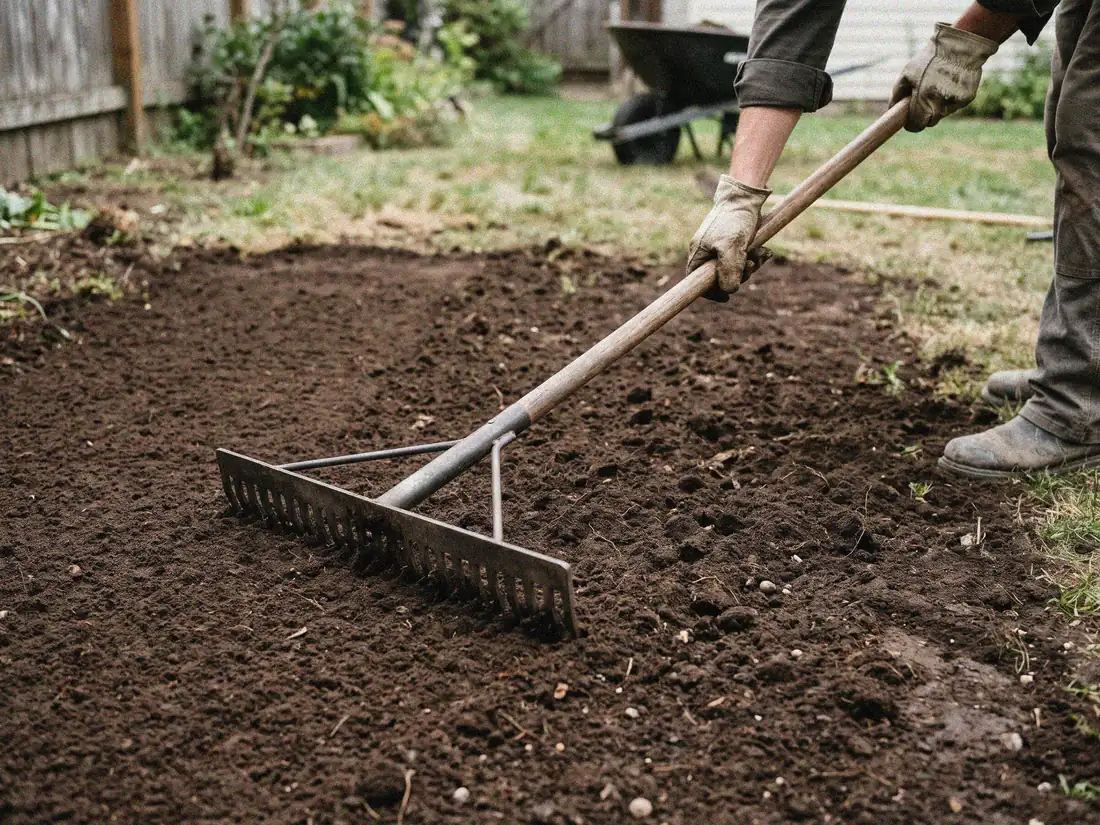
| Layer (bottom to top) | What to use | Notes |
|---|---|---|
| Bottom | Logs, thick branches, untreated wood offcuts | Rots slowly and holds moisture. Avoid treated or diseased wood. |
| Next | Upturned turf, twiggy prunings | Turf placed grass-side down breaks down into rich soil |
| Next | Cardboard (tape and plastic removed), leaves, garden waste | Smothers weeds and adds organic matter |
| Top 25–30 cm | Topsoil mixed with compost | Where your plants actually grow: don’t skimp on this layer |
How deep does the good soil need to be?
At least 25–30 cm of good soil suits most vegetables and flowers. Deep-rooted crops such as carrots and parsnips do better with more, so keep woody material deeper in beds where you’ll grow them.
How much does it save?
| Bed (2.4 × 1.2 m, 60 cm deep) | Bought soil |
|---|---|
| Filled entirely with soil | About 1,730 litres: 35 × 50 L bags |
| Top 30 cm soil, layers below | About 860 litres: 18 × 50 L bags |
Work out your own bed with the raised bed soil calculator: enter just the depth of the good soil layer.
When is the best time to build a layered bed?
Autumn is ideal. Garden waste, leaves and turf are easy to come by, and the layers have the winter to start breaking down and settle before spring planting. If you build in spring, you can plant straight away; just expect the surface to sink more during the first season and keep some compost aside for topping up.
Which plants suit a layered bed?
Most vegetables, herbs and flowers grow well, because their roots stay mainly in the top layer of good soil. Hungry crops such as squash and courgettes often do especially well in the first year as the lower layers break down. Root crops need the deepest, most even soil, so give them the bed with the thickest top layer.
Will the bed sink?
Yes. As the lower layers rot down, the surface sinks, sometimes by several centimetres in the first year or two. Plan to top up with compost each season; the rotting layers keep feeding the soil as they go.
What mistakes should I avoid?
- A thin top layer: plants struggle if good soil is only a few centimetres deep.
- Fresh woody material near the surface: as it rots it can temporarily tie up nitrogen near the roots, so keep it at the bottom.
- Treated or painted wood in the layers.
- Perennial weed roots (such as bindweed) in the garden waste.
Calculators for this job
More guides
 UK skip sizes explained: what each skip holds
 How to lay turf: a step-by-step UK guide
 How to lay a self-binding gravel path (UK guide)
Barrowload guide · UK · Figures are typical; always check your product and local rules.