Colorbond fencing: panels, posts and how much to order
A Colorbond fence goes up quickly once the planning is right: knowing your boundary, agreeing with your neighbour, and counting panels, posts and concrete before you order.
How much do I need for a Colorbond fence?
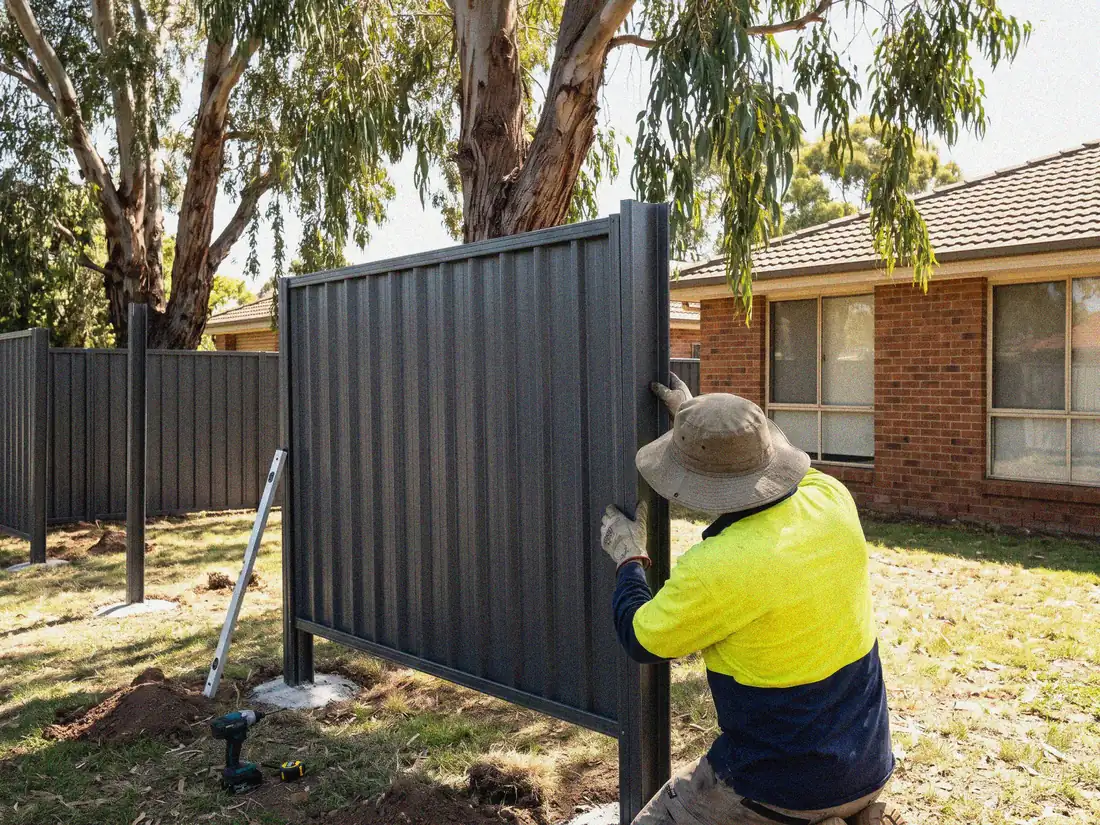
Divide the fence length by the panel width and round up for panels; on a straight run you need one more post than panels, plus extra posts for corners and gates. A 20 m straight fence needs 9 panels, 10 posts and about 20 × 20 kg bags of rapid-set concrete.
What should I check before building?
- Dividing fence rules. Each state has its own rules on boundary fences, including how costs are shared and what notice to give your neighbour. Check your state’s rules and talk to your neighbour first.
- Your boundary. Build on the right line; if you’re unsure where it is, a surveyor can mark it.
- Council rules on fence height and front fences, which vary between councils.
- Underground services. Use Before You Dig Australia before digging post holes.
How wide are Colorbond panels?
Panels are commonly about 2.365–2.38 m wide, with 3.1 m panels in some areas such as Victoria. Check your supplier’s width and enter it in the fencing calculator.
How many posts do I need?
On a straight run, posts = panels + 1. Every change of direction adds a run, and neighbouring runs share their corner post. Gates usually need their own posts, so add those separately.
| Fence | Panels | Posts | Concrete (2 × 20 kg per post) |
|---|---|---|---|
| 20 m straight | 9 | 10 | 20 bags |
| L-shape: 12 m + 8 m | 6 + 4 = 10 | 7 + 5 − 1 shared corner = 11 | 22 bags |
How much concrete for the posts?
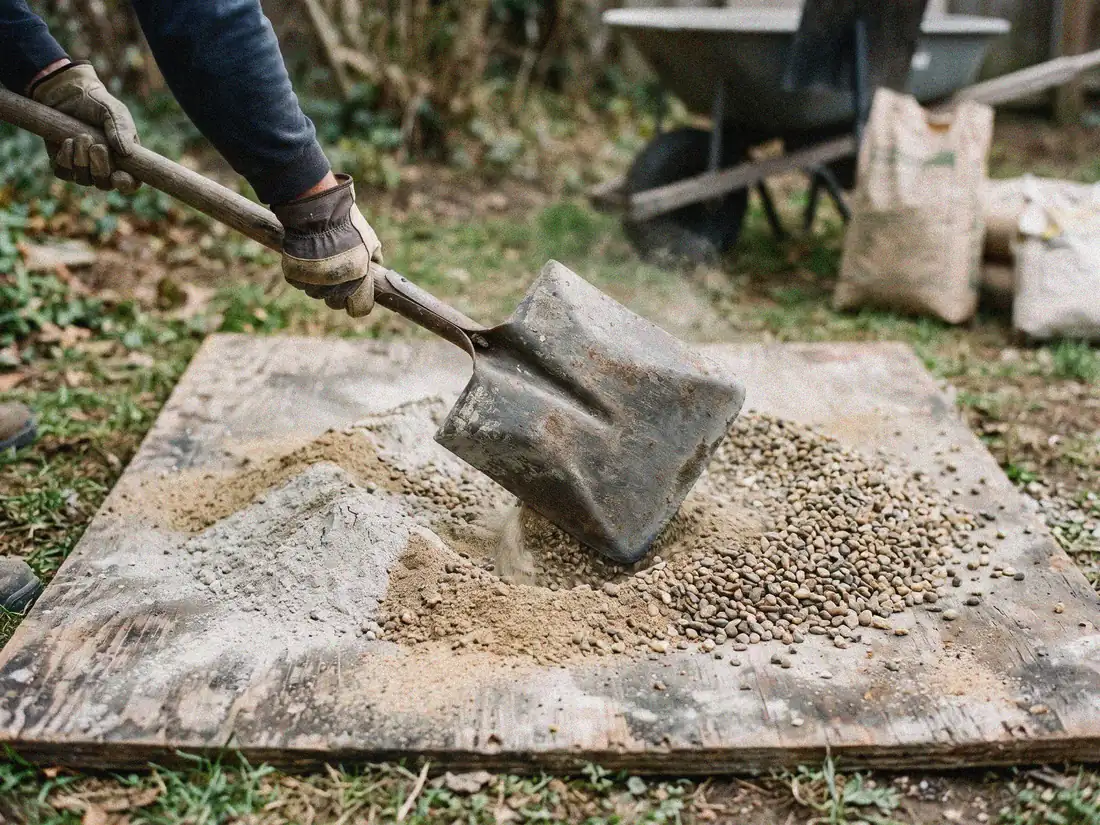
Rapid-set concrete is commonly used for steel fence posts. Cement Australia suggests about 2 × 20 kg bags per post hole, which is the calculator’s default. Dig holes to the depth in your fence kit’s installation guide; taller fences generally need deeper, wider holes.
How is a Colorbond fence installed?
- Mark the fence line with string lines and pegs.
- Mark post positions at the panel spacing.
- Dig the first post hole and set the end post, checking it’s plumb.
- Set the following posts at the panel spacing, using the string line to keep them straight.
- Fit the rails and sheets as each post sets, following the kit instructions.
- Add plinths where the ground steps or where soil sits against the fence.
Can I build a Colorbond fence myself?
Many people do. Colorbond fences are sold as kits of posts, rails and sheets, and a straight run on level ground is a manageable job for two confident DIYers. Consider a professional installer for long runs, sloping or stepped ground, fences that also retain soil, or anywhere you’re unsure about the boundary. Installers also usually handle removing the old fence, which is easy to underestimate.
What mistakes should I avoid?
- Forgetting corner and gate posts, the most common counting error.
- Building before agreeing with your neighbour on a boundary fence.
- Measuring the wrong line: measure along the exact fence line, not the garden bed beside it.
- Too little concrete, which lets posts lean in strong wind.
Calculators for this job
More guides
 How to build a raised garden bed in Australia
 Crusher dust vs road base: which do you need?
 How to lay synthetic grass in Australia
Barrowload guide · Australia · Figures are typical; always check your product and local rules.