Paving slab sizes: how many slabs per square metre?
Paving slabs come in a handful of popular sizes, and each one covers a square metre differently. Knowing the numbers makes ordering much easier.
How many slabs are in a square metre?
It depends on the slab. With 10 mm joints, one square metre takes about 2.7 slabs of 600 × 600 mm, 4 slabs of 600 × 400 mm or 1.8 slabs of 600 × 900 mm. Larger slabs mean fewer pieces to lay, but they’re heavier to handle.
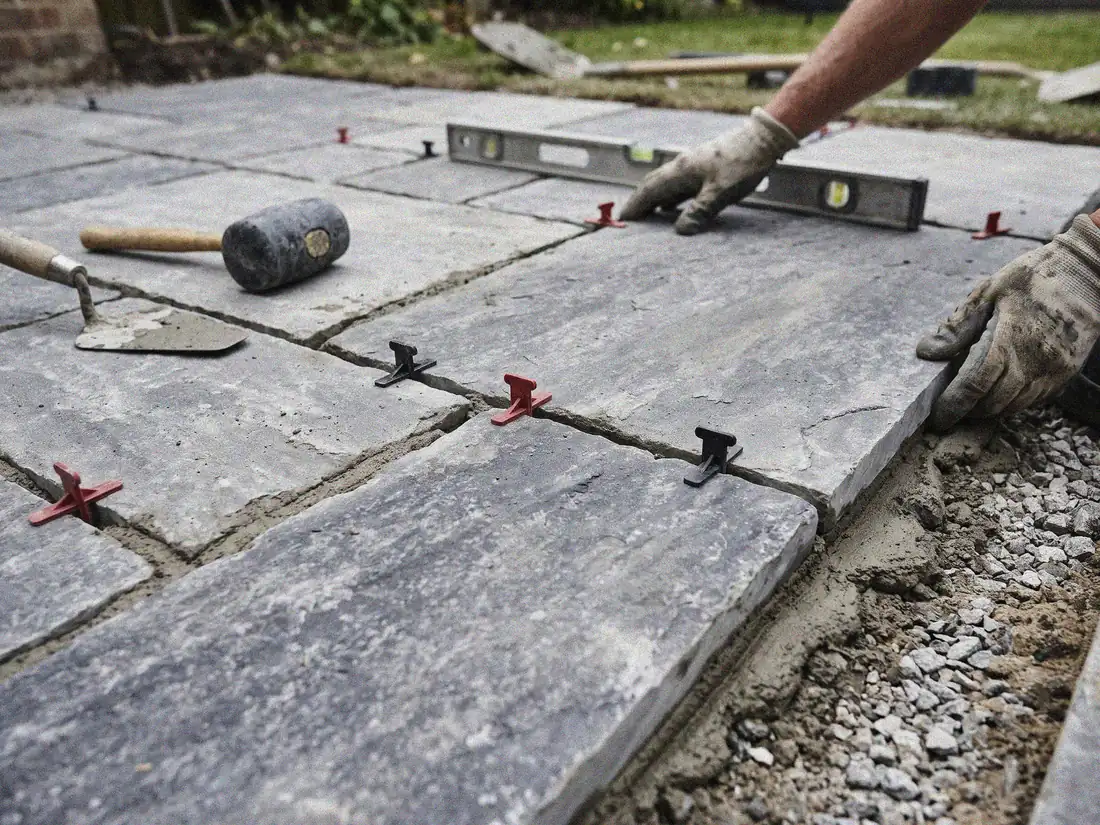
What are the paving slab standard sizes?
There isn’t one single standard paving slab size in the UK, but a few sizes appear in almost every range. Indian sandstone and porcelain are often sold in the same sizes, sometimes as mixed-size “patio packs”.
| Slab size | Slabs per m² (10 mm joints) | Slabs per 10 m² |
|---|---|---|
| 600 × 600 mm | About 2.7 | 27 |
| 600 × 900 mm | About 1.8 | 19 |
| 900 × 900 mm | About 1.2 | 13 |
| 600 × 400 mm | About 4.0 | 40 |
| 450 × 450 mm | About 4.7 | 48 |
| 600 × 300 mm | About 5.3 | 53 |
Wider joints mean slightly fewer slabs per square metre, so homeowners using 15 mm joints will need a little less.
How many 600x600 slabs are in a square metre?
Without joints, 600 × 600 mm slabs would fit exactly 2.78 to the square metre. Real patios have joints, so with 10 mm gaps the figure drops to about 2.7, which works out at 27 slabs for every 10 m².
How many 600 x 400 pavers in a square metre?
With 10 mm joints, 600 × 400 mm slabs (often called pavers) cover a square metre with about 4 pieces, or 40 per 10 m².
How many slabs do I need for an 8x6 shed?
An 8 × 6 ft shed sits on a base of about 2.44 × 1.83 m. That happens to suit 600 × 600 mm slabs perfectly: 4 slabs by 3 slabs, so 12 in total. Most people order 13 to allow for a breakage. A shed base with slabs needs the same preparation as a small patio: a compacted sub-base, a level bedding layer, and a little fall so rain runs off.
| 8 × 6 ft shed | Amount |
|---|---|
| 600 × 600 mm slabs | 12 (order 13) |
| MOT Type 1 sub-base, 10 cm compacted | 38 × 25 kg bags or 2 bulk bags |
What are the slab layers?
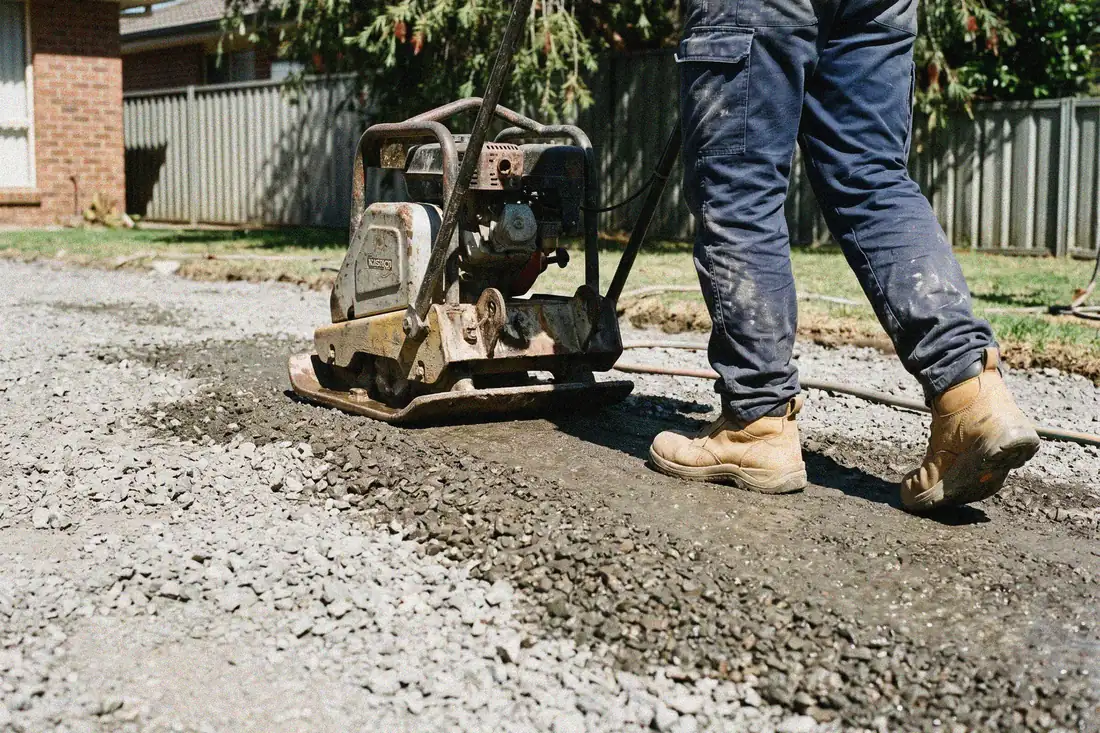
A paved area that stays flat is built in layers, from the ground up:
- Compacted sub-base: usually crushed stone such as Type 1, about 10 cm deep for patios and paths (15 cm for drives).
- Bedding layer: a bed of sharp sand and cement mortar that the slabs are pressed into.
- The slabs: laid with even joints and a gentle fall away from the house.
- Jointing: the gaps filled with mortar or a jointing compound.
Can slabs go straight onto soil?
Laying slabs on dirt is tempting for a quick job, but soil moves, holds water and lets weeds through, so the slabs soon sink or rock. Even a small shed base on slabs lasts far longer with a compacted sub-base underneath.
What is the best mix for laying slabs?
A common bedding mix is 4 parts sharp sand to 1 part cement. Sharp sand’s coarse grains give a firm bed; soft building sand is better kept for bricklaying. For quantities, the bedding mortar tool works out the bags for any area.
How do homeowners work out their own order?
To calculate slabs for any shape, measure the area, pick a slab size and add about 5% for cuts and breakages. Anyone wondering how many paving slabs will I need for an odd-shaped patio can use Barrowload’s slab quantity tool, which handles joints and extra automatically. For the full step-by-step, see the guide to laying a patio.
Calculators for this job
More guides
 How to build a sleeper raised bed (UK guide)
 How to plant a hedge (UK guide)
 Pea shingle vs 20 mm gravel: which is best?
Barrowload guide · UK · Figures are typical; always check your product and local rules.