How to top dress a lawn in Australia
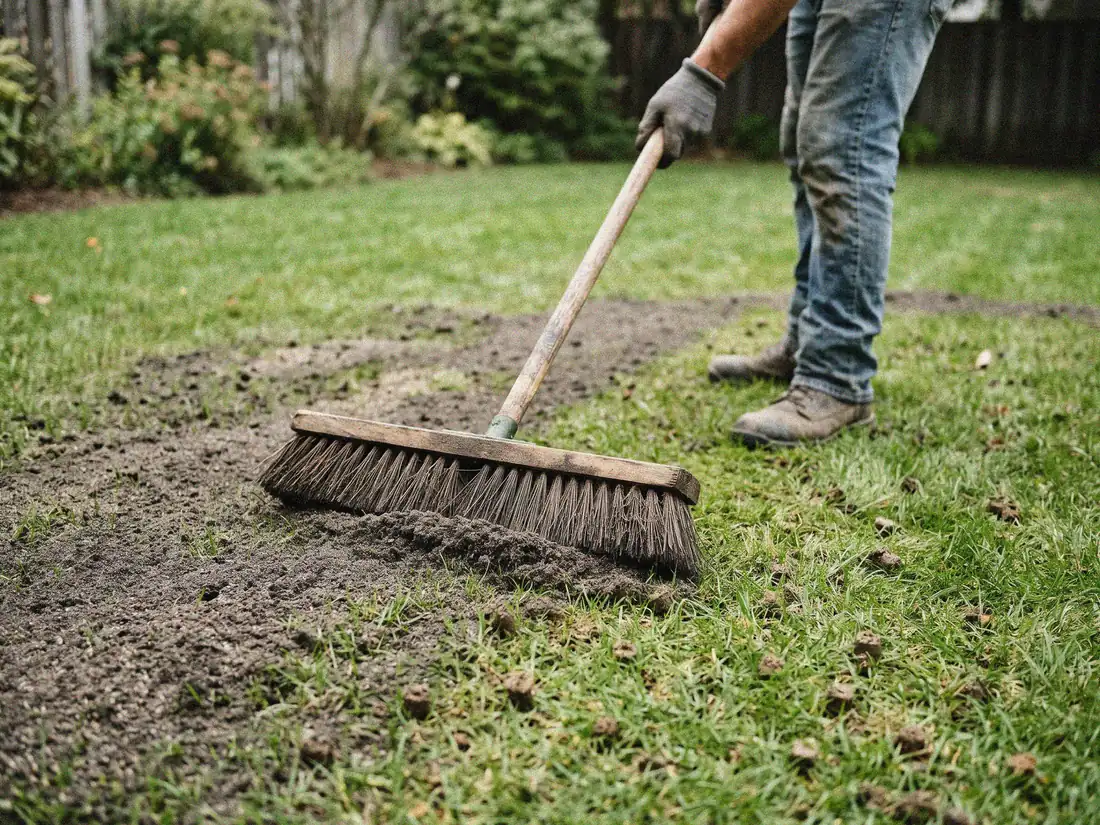
Top dressing is the quiet fix for a bumpy, tired lawn. A thin layer of sandy soil, worked into the grass, fills dips, improves the soil and helps the lawn thicken up. The trick is doing it at the right time, and keeping it thin.
The short version
Top dress warm-season lawns while they’re growing strongly, usually from late spring into summer. Spread about 5 mm of top dressing, work it into the grass so the leaf tips still show, and water it in. For a 100 m² lawn, that’s about 0.5 m³, roughly 800 kg.
Why top dress at all?
- Levelling: it gradually fills shallow dips and hollows.
- Better soil: sandy mixes improve drainage on heavy ground.
- Recovery: it helps a lawn bounce back after scarifying or wear.
It won’t fix deep holes in one go. For anything deeper than a centimetre or so, build it up over several applications, letting the grass grow through between each.
When to do it
| Lawn type | Best time | Notes |
|---|---|---|
| Buffalo | Late spring to summer, while actively growing | Keep layers thin; buffalo doesn’t like being smothered |
| Couch | Late spring to summer | Recovers quickly, even through a slightly thicker layer |
| Kikuyu | Late spring to summer | Vigorous; also recovers quickly |
| Zoysia | Late spring to summer | Grows more slowly, so keep it thin |
| Cool-season (fescue, rye) | Autumn or spring | Avoid the heat of summer |
Avoid top dressing a stressed lawn in drought or extreme heat, or a dormant one in winter. The grass needs to be growing to push through.
What to use
Landscape suppliers sell “lawn top dressing”, usually a washed sand or a sandy loam mix. Washed sand is good for levelling and drainage; a sandy loam with some organic matter adds a little more to the soil. Match it roughly to your existing soil, because very different layers can stop water moving freely.
How much to buy
| Lawn size | At 5 mm deep | About |
|---|---|---|
| 50 m² | 250 litres (0.25 m³) | 400 kg |
| 100 m² | 500 litres (0.5 m³) | 800 kg, or 40 × 20 kg bags |
| 200 m² | 1,000 litres (1 m³) | 1.6 tonnes |
Top dressing is heavy, about 1.6 kg per litre, so bags go less far than you’d expect: a 20 kg bag holds only about 12–13 litres. For anything more than a small patch, buying loose by the cubic metre is usually cheaper. Use the lawn top dressing calculator for your exact area.
How to do it
- Mow a little lower than usual, and remove the clippings.
- Scarify or dethatch if there’s a thick layer of thatch, and aerate compacted areas.
- Feed the lawn if it’s due, so it has the energy to grow through.
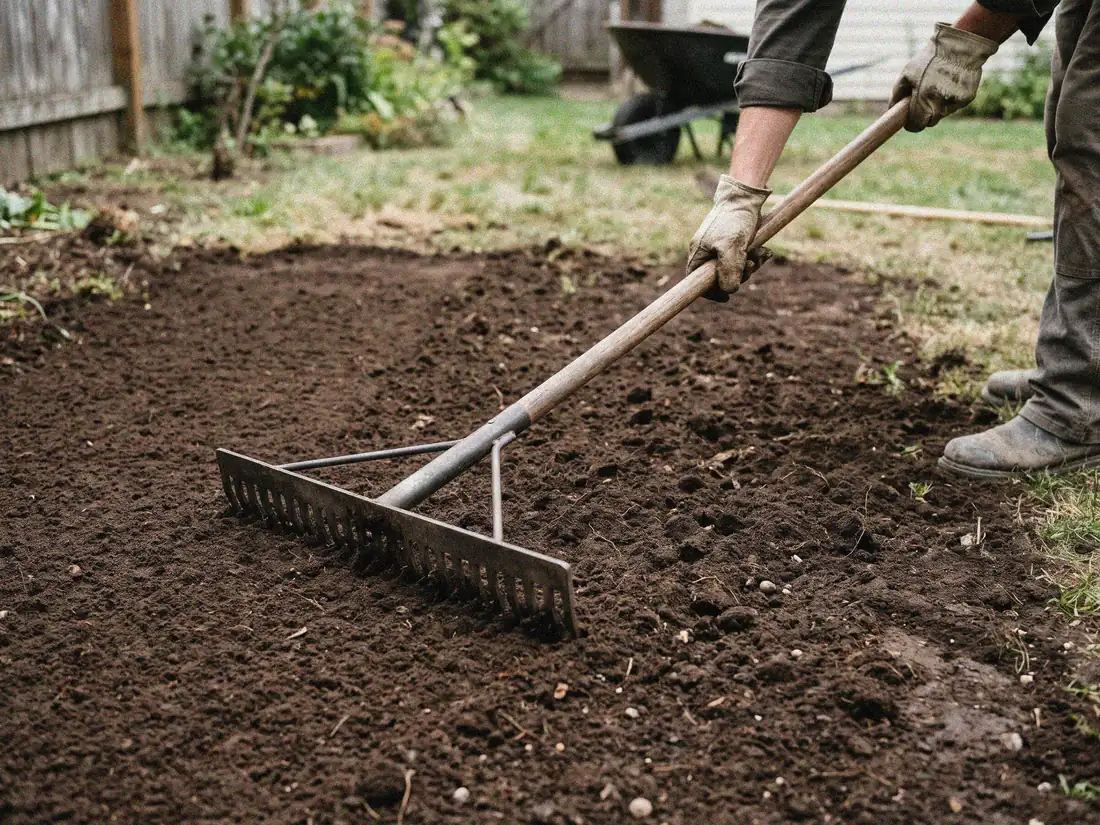
- Spread the top dressing in small heaps, then push it out with the back of a rake or a lawn leveller.
- Work it in until the leaf tips poke through. If you can’t see grass, it’s too thick.
- Water it in, then keep the lawn moist while it recovers.
Aftercare
Keep the lawn moist for the next week or two while the grass grows through, watering lightly every day or two in hot weather. Hold off mowing until the grass has clearly pushed through the top dressing, then mow on a higher setting for the first cut. Any low spots that still show can be topped up a few weeks later, once the first layer has settled. Expect the lawn to look a little sandy for a week or so; that fades quickly as it grows.
Mistakes to avoid
- Going too thick: more than about 12 mm at once can smother the grass.
- Top dressing at the wrong time: a dormant or drought-stressed lawn can’t grow through.
- Using the wrong material: heavy clay soil or fine sand that sets hard can make drainage worse.
- Trying to fix deep hollows in one go: build them up gradually.
Calculators for this job
More guides
 How to build a raised garden bed in Australia
 Crusher dust vs road base: which do you need?
 How to lay synthetic grass in Australia
Barrowload guide · Australia · Figures are typical; always check your product and local rules.