Home / US calculators / Building and hardscape
Concrete calculator
Work out concrete for slabs, pads and footings. US units: feet, inches and cubic feet. Results update as you type.
How much concrete do I need?
Concrete needed = length × width × depth. An area of 10 ft × 10 ft at 4 in deep needs 1.23 cubic yards, about 2.24 US tons. Order 56 × 80 lb bags, or 1.23 cubic yards of ready-mix concrete. Order 5–10% extra, as running short mid-pour weakens the slab.
On this page
Key facts
- One cubic yard of concrete needs about 45 × 80 lb premix bags.
- A 4 in slab suits patios, walks and shed pads.
- Order about 5–10% extra.
- Ready-mix is usually easier above about half a cubic yard.
How thick should a concrete slab be?
Common thicknesses for garden and home projects; follow local rules and any engineer’s design:
| Project | Typical thickness | Notes |
|---|---|---|
| Paths and garden pads | 3–4 in | Foot traffic |
| Shed and summerhouse bases | 4 in | On a compacted sub-base |
| Driveways and parking | 4–6 in or more | Often reinforced |
Bags or ready-mix?
Bagged concrete mix comes in 40, 60 and 80 lb bags. An 80 lb bag makes about 0.6 cu ft, so one cubic yard needs about 45 × 80 lb bags. Ready-mix concrete is typically ordered by the cubic yard and is usually easier for larger slabs.
Preparing for a pour
- Compact a sub-base first; see the sub-base calculator.
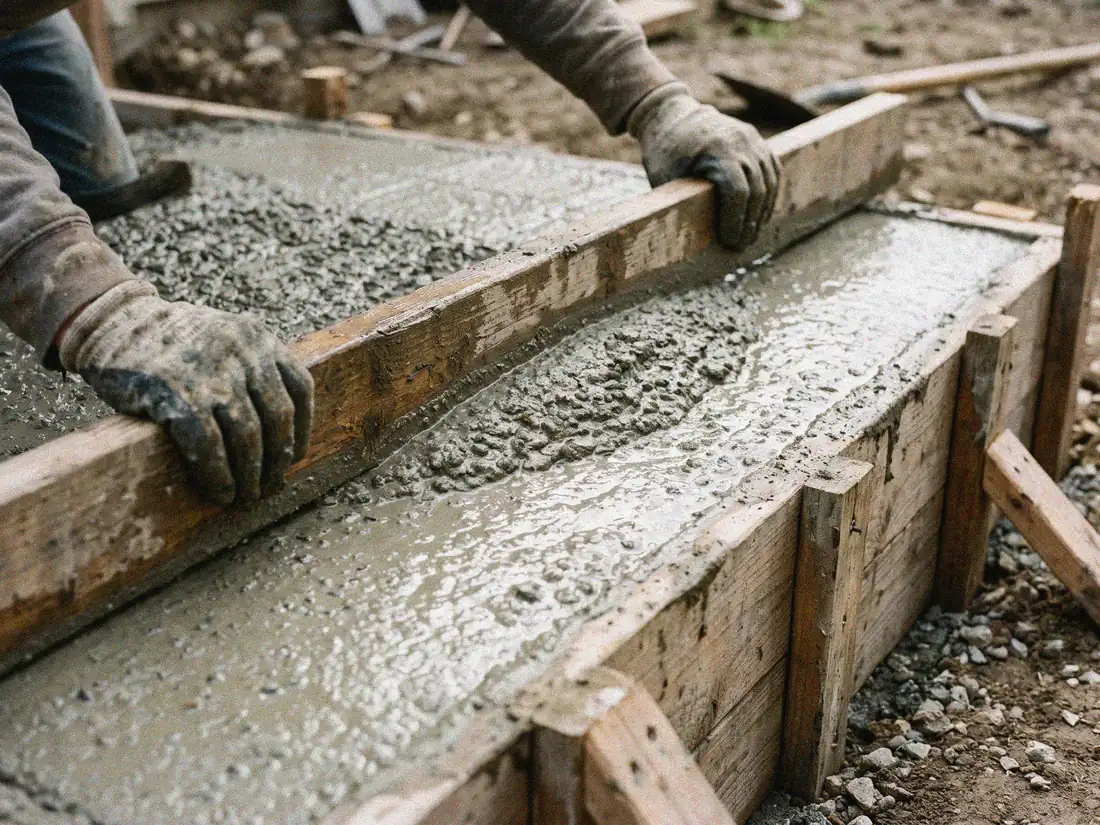
- Build level formwork to the slab thickness.
- Check access for a mixer or truck.
- Plan for curing: keep the slab damp and protected for several days.
How do I work out the cost?
Enter the price per bag in the calculator and it multiplies it by the quantity you need to give an estimated total. Use the Check prices links to see current prices from local retailers. For bulk deliveries priced per tonne or per m³ (or per ton or cubic yard), multiply the quantity in the results by the supplier’s rate instead.
Remember to budget for delivery, any minimum-order or part-load charges, and tool or mixer hire. Prices vary by region and supplier, so compare a few quotes.
What mistakes should I avoid?
- Not ordering extra, then running short.
- Uneven ground making the slab thicker than planned.
- Pouring onto soft soil without a sub-base.
- Mixing too wet, which weakens concrete.
How is it calculated?
Volume = length × width × depth, with depth converted to feet (inches ÷ 12), and cubic feet ÷ 27 = cubic yards. Circles, triangles and L-shapes use the matching area formula. Bag counts use about 2.15 t/m³, which gives about 0.6 cu ft per 80 lb bag, in line with common premix bags. Bags and bulk amounts are rounded up, because you can’t buy part of a bag.
Worked examples
Patio slab: 10 ft × 10 ft at 4 in deep = 1.23 cubic yards, about 2.24 US tons. Order 56 × 80 lb bags, or 1.23 cubic yards of ready-mix concrete.
Shed pad: 12 ft × 12 ft at 4 in deep = 1.78 cubic yards, about 3.22 US tons. Order 81 × 80 lb bags, or 1.78 cubic yards of ready-mix concrete.
Common questions
How many 80 lb bags in a yard of concrete?
About 45, as each makes roughly 0.6 cu ft.
How thick should a shed base be?
About 4 in on a compacted sub-base.
Should I add extra?
Yes, about 5–10% for uneven ground and spillage.
When is ready-mix worth it?
For most slabs over about half a cubic yard, where mixing by hand becomes slow and heavy.
How long does concrete take to cure?
It can usually be walked on after a day or two, but takes weeks to reach full strength. Keep it damp while curing.