Topsoil vs fill dirt: which one do you need?
They’re both “dirt”, and they’re often sold side by side, but they do completely different jobs. Order the wrong one and you’ll either pay for nutrients you’re burying or plant a lawn in soil that won’t feed it.
The short version
- Fill dirt is for filling and shaping: holes, low spots, raising a grade, backfilling around a foundation. It’s mostly subsoil, with little organic matter, so it compacts and stays put.
- Topsoil is for growing: the top few inches under a new lawn or in garden beds. It’s darker, looser and full of organic matter.
- Many projects use both: fill dirt to build up the level, then 4–6 inches of topsoil on top.
Side by side
| Fill dirt | Topsoil | |
|---|---|---|
| What it is | Subsoil: clay, sand and rock, little organic matter | The fertile top layer, with organic matter |
| Looks like | Lighter, often clay-coloured or sandy | Dark brown and crumbly |
| Best for | Filling holes, raising or leveling ground, backfill | Lawns, garden beds, top layer of any planted area |
| Compacts? | Yes, which is what makes it stable | Settles a little, but stays loose enough for roots |
| Grows grass? | Poorly | Yes |
| Typical cost | Usually the cheaper of the two | More expensive, especially screened topsoil |
Screened topsoil has been sifted to remove stones, roots and clumps. It costs more but spreads far more easily, which matters for lawns. If you’re seeding, it’s usually worth it.
How deep should it be?
| Job | What to use | Typical depth |
|---|---|---|
| New lawn (seed or sod) | Topsoil | 4–6 in |
| Top-dressing a thin lawn | Topsoil or compost blend | ¼–½ in |
| New garden bed | Topsoil, often mixed with compost | 8–12 in |
| Filling a low spot or hole | Fill dirt, then topsoil on top | Whatever the gap needs, minus 4–6 in for topsoil |
| Raising a grade | Fill dirt in compacted layers, then topsoil | Depends on the slope you need |
If you’re grading near the house, the ground should slope away from the foundation. Building codes commonly call for a fall of about 6 inches over the first 10 feet. Never pile soil up against siding.
How much to order
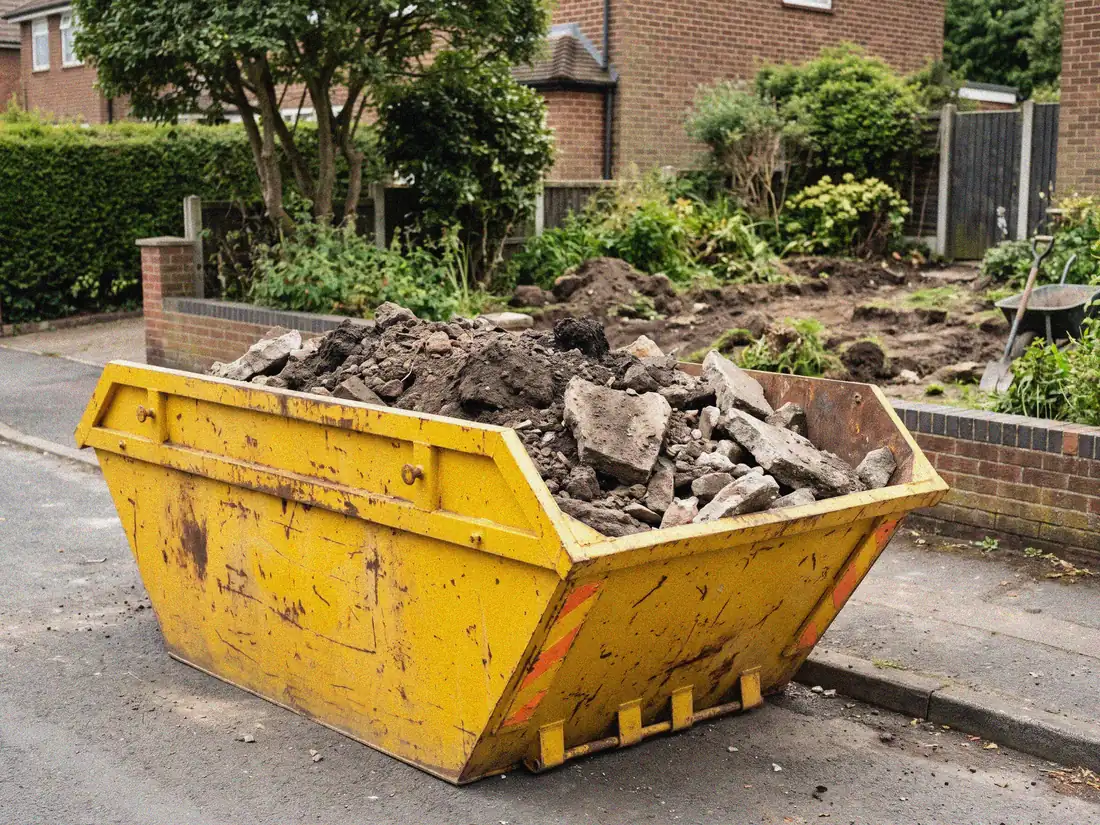
Soil is sold by the cubic yard in bulk, or in bags of 0.75–1 cubic foot. A cubic yard is 27 cubic feet and weighs roughly a ton.
Worked example: a new lawn of 30 × 20 ft with 4 inches of topsoil is 600 sq ft × ⅓ ft = 200 cubic feet, or about 7.4 cubic yards (roughly 7.5 tons). In bags, that’s 267 × 0.75 cu ft bags, which is why bulk delivery makes sense for anything bigger than a small bed.
Use the topsoil and fill dirt calculator with your own measurements. For several separate areas, add them in the calculator’s “number of areas” box or work each out and add them up.
Buying tips
- Ask what’s in it. “Topsoil” varies a lot between suppliers. Ask whether it’s screened and whether it’s blended with compost.
- Look before you buy if you can. Good topsoil is dark, crumbly and smells earthy, with no trash or chunks of construction debris.
- Check the delivery details: minimum order, where the truck can dump, and whether it can reach the backyard.
- Order a little extra. Soil settles, and uneven ground uses more than the maths suggests. About 10% is a sensible margin.
Spreading it
- Remove weeds, old turf and debris.
- For fill, spread in layers of a few inches and compact each one before adding more.
- Rough-grade the surface so water drains away from buildings.
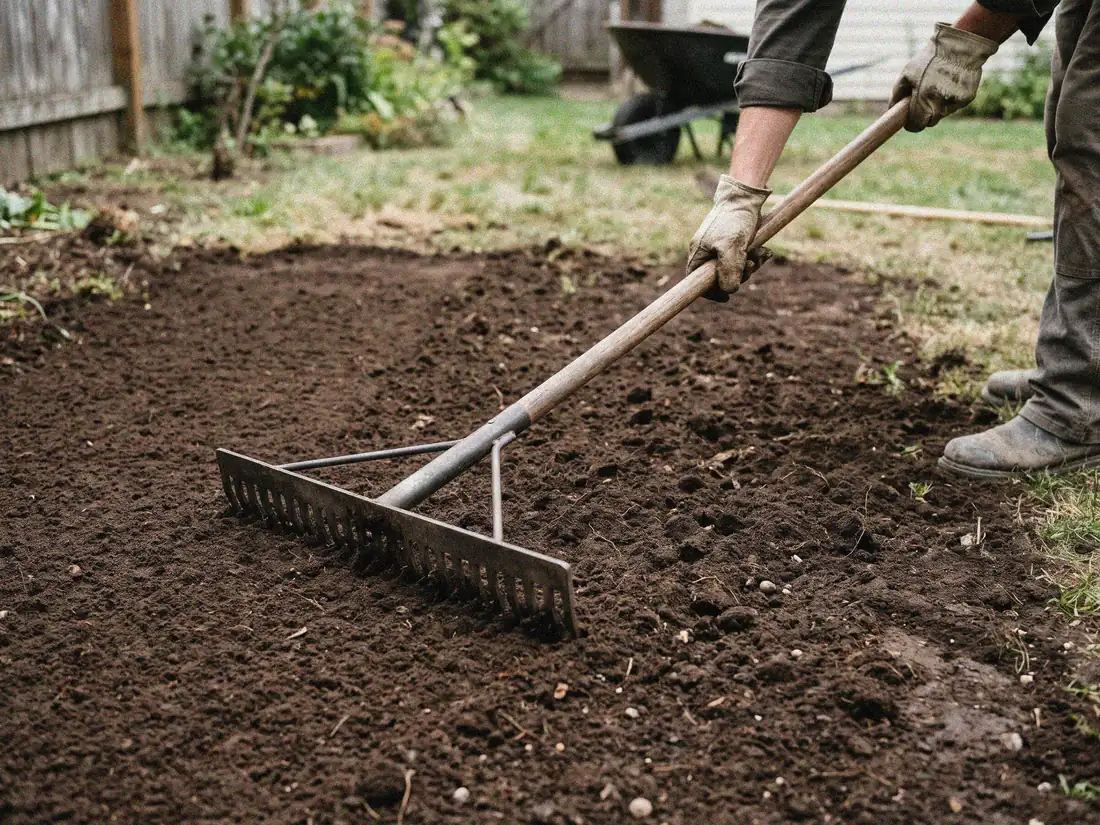
- Spread topsoil evenly with a rake, breaking up clumps.
- Water lightly and let it settle for a few days, then fill any low spots before seeding or laying sod.
Mistakes to avoid
- Seeding straight into fill dirt. Grass struggles without topsoil.
- Using topsoil as deep fill. It’s expensive and settles more than fill dirt.
- Not compacting fill. It will sink later, leaving dips.
- Sloping soil towards the house. Water should always run away from the foundation.
Calculators for this job
More guides
 How to build a gravel driveway (US guide)
 How to fill a raised garden bed: soil mix and how much to buy
 How to lay pavers: base, sand and joints (US guide)
Barrowload guide · US · Figures are typical; always check your product and local rules.