How to lay pavers: base, sand and joints (US guide)
A paver patio lasts for decades when the layers underneath are right, and sinks or shifts within a season when they aren’t. Here’s how the layers fit together, and how much of each to buy.
How do you lay pavers?
Dig out, compact about 4 in of paver base (6 in or more for a driveway), screed a 1 in layer of bedding sand, lay the pavers, fit edge restraints, then sweep polymeric sand into the joints. A 16 × 12 ft patio needs about 2.4 cubic yards of base, 0.6 cubic yards of bedding sand, 908 pavers (4 × 8 in) and 4 bags of polymeric sand.
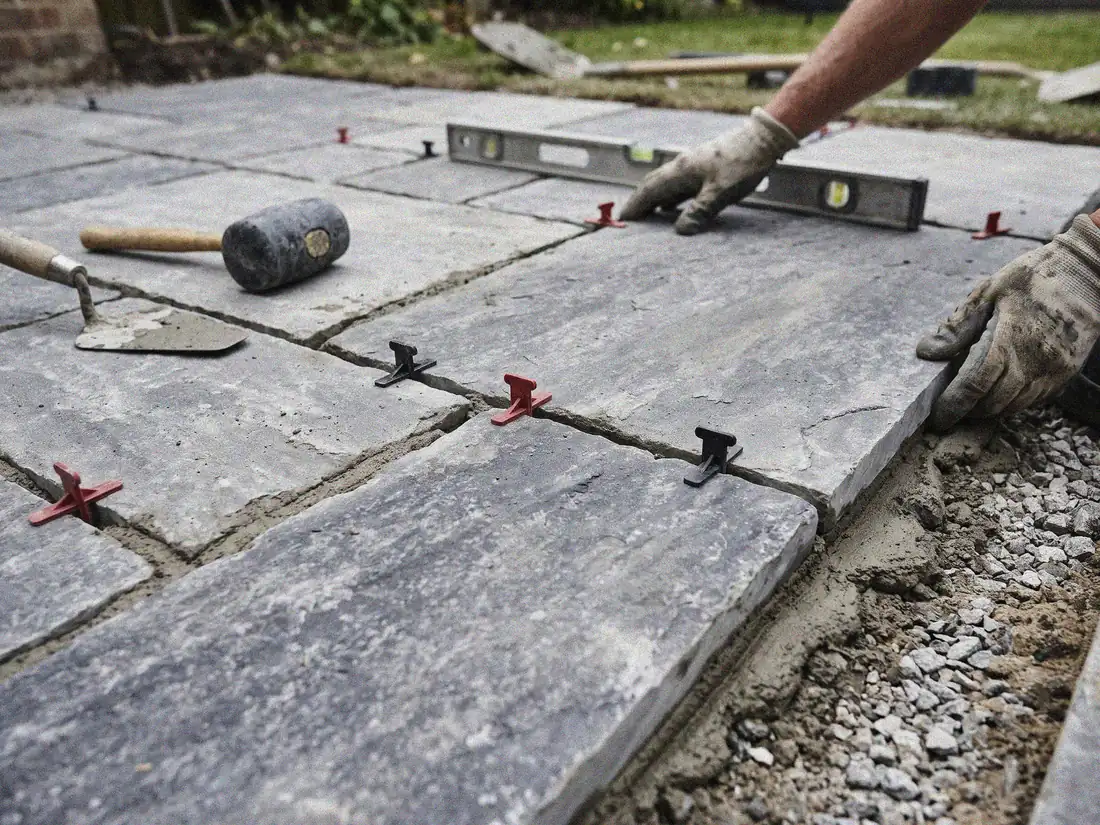
What goes under pavers?
| Layer | Typical depth | What it does |
|---|---|---|
| Compacted paver base (crushed stone) | About 4 in for patios and walks; 6 in or more for driveways | The load-bearing foundation |
| Bedding sand | About 1 in, screeded flat, not compacted first | A smooth, even bed for the pavers |
| Pavers | Usually 2¼–2⅜ in thick | The finished surface |
| Polymeric sand in the joints | Fills the joints | Locks pavers together and resists weeds and washout |
How do I build the base?
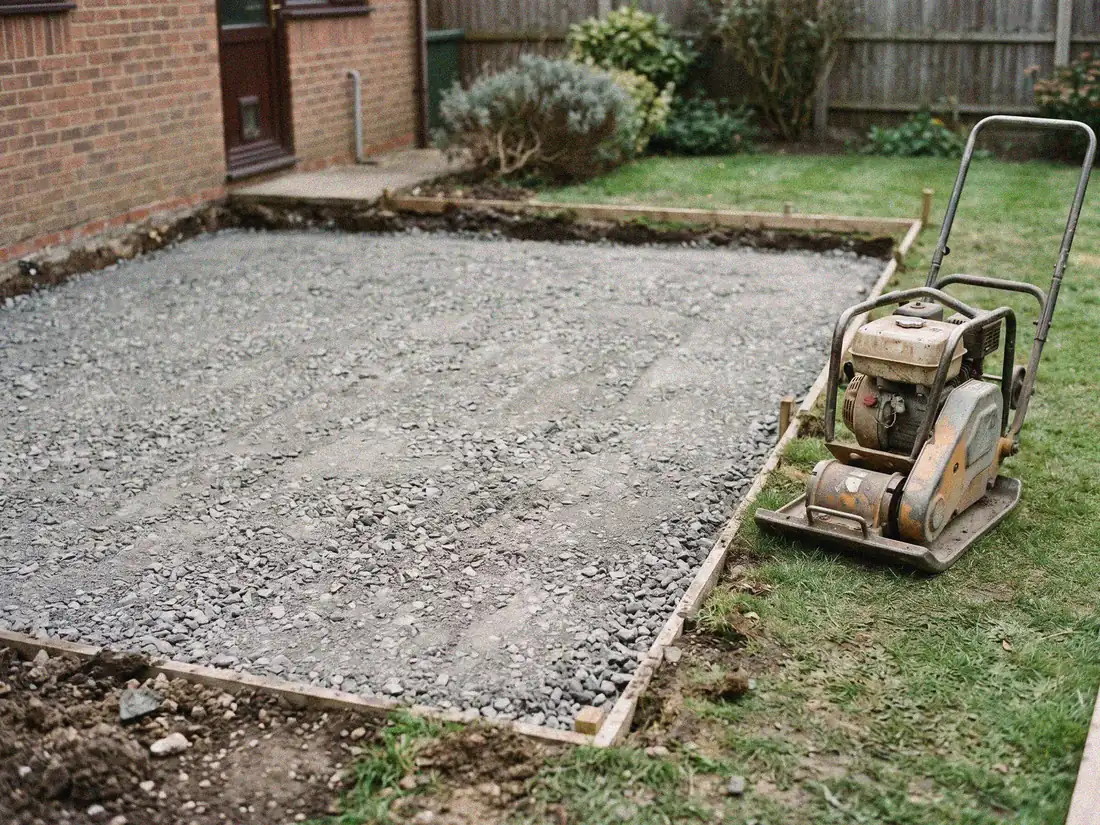
- Mark out the area and plan a gentle slope away from the house so water runs off; a fall of about 1/4 in per foot is a common guideline.
- Dig out to the base depth plus the sand and paver thickness.
- Spread the paver base in layers and compact each one with a plate compactor.
- Check the surface follows your planned slope.
How do I lay the bedding sand?
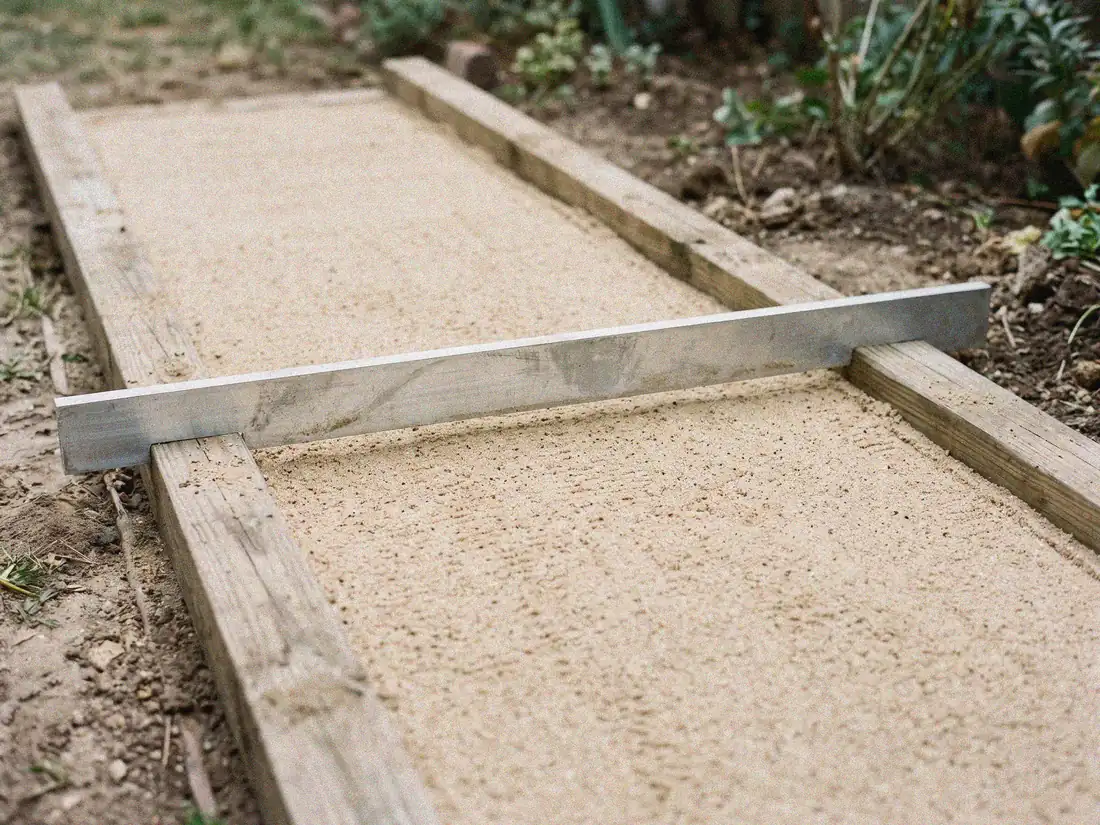
Lay two screed rails (lengths of 1 in pipe work well) on the compacted base, spread coarse sand over them, and pull a straight board across the rails to leave a flat 1 in layer. Remove the rails and fill their grooves. Don’t walk on the screeded sand.
How do I lay and finish the pavers?
- Start from a straight edge or corner and place pavers straight down onto the sand, not slid.
- Keep joints consistent and check lines regularly with a string line.
- Cut edge pieces with a masonry saw or splitter.
- Fit edge restraints around the open edges so the pavers can’t spread.
- Run a plate compactor (with a protective pad) over the pavers to bed them in.
- Sweep in polymeric sand, compact again, top up, clean the surface thoroughly, then mist as the product directs.
How much do I need for a 16 × 12 ft patio?
| Material | Amount | Calculator |
|---|---|---|
| Paver base (4 in) | 2.37 cu yd, or 168 × 50 lb bags | Paver base |
| Bedding sand (1 in) | 0.59 cu yd, or 32 × 50 lb bags | Paver sand |
| Pavers (4 × 8 in) | 908, including about 5% for cuts | Paver |
| Polymeric sand (1/8 in joints) | 4 × 50 lb bags | Polymeric sand |
For this size, bulk base and sand are usually far easier than bags, if a truck can reach the site.
What mistakes should I avoid?
- A thin or uncompacted base: the main reason pavers sink.
- Too much bedding sand: more than about 1 in lets pavers move.
- No edge restraint, so the edges creep outwards.
- No slope, leaving puddles against the house.
- Polymeric sand on damp pavers, or before rain.
Calculators for this job
More guides
 How to build a gravel driveway (US guide)
 How to fill a raised garden bed: soil mix and how much to buy
 Topsoil vs fill dirt: which one do you need?
Barrowload guide · US · Figures are typical; always check your product and local rules.