How to mulch garden beds in Australia
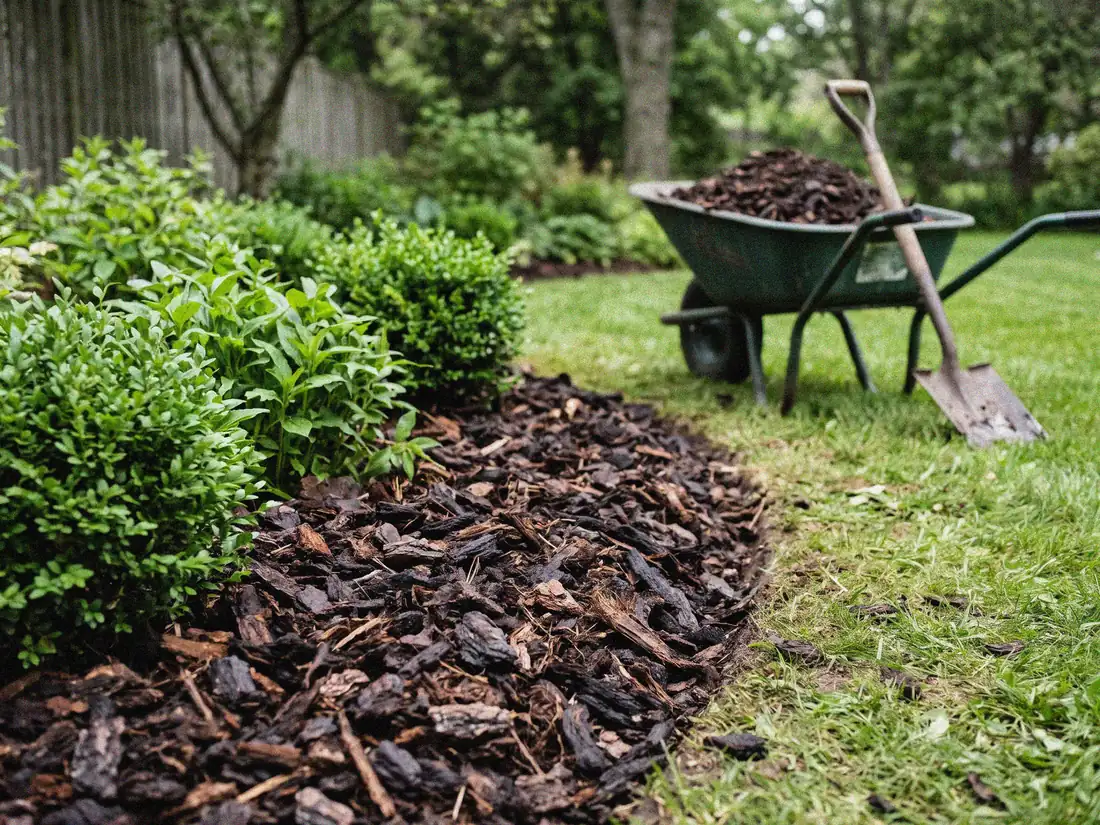
In an Australian summer, a good layer of mulch is one of the best things you can give a garden. It holds moisture in the soil, keeps roots cooler and smothers weeds. Getting the depth right, and keeping it off stems, makes all the difference.
The short version
Water the bed first, then spread mulch about 5–8 cm deep, keeping it a hand’s width clear of stems and trunks. Top it up once or twice a year as it breaks down. A 5 × 2 m bed at 7.5 cm needs 0.75 m³: about 19 × 40 L bags.
Why mulch?
- Holds moisture: less evaporation means less watering.
- Keeps soil cooler in summer heat.
- Smothers weeds by blocking light.
- Feeds the soil as organic mulches break down.
Choosing a mulch
| Mulch | Good for | Notes |
|---|---|---|
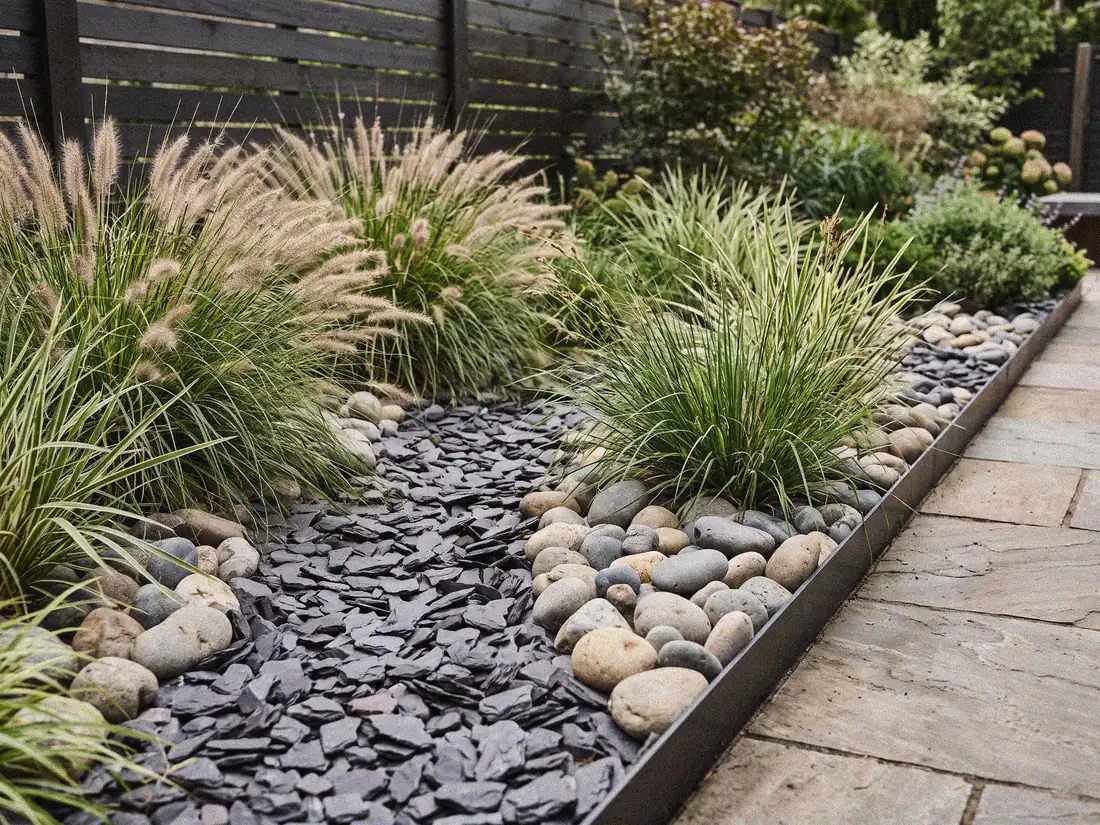
| Pine bark | Shrubs, natives and general beds | Long-lasting, a tidy look |
| Hardwood or eucalypt chip | Large beds and under trees | Breaks down slowly |
| Sugar cane or pea straw | Vegetable beds and annuals | Breaks down fast and feeds the soil; top up often |
| Leaf mulch / forest blend | Natives and woodland-style beds | Natural look, good for soil life |
| Pebbles or gravel | Succulents, modern and low-water gardens | Doesn’t break down; can hold heat |
How deep?
| Bed | Depth |
|---|---|
| Vegetable beds (straw-type mulch) | About 5 cm |
| Shrub and flower beds | 5–8 cm |
| Under trees | 7.5–10 cm, kept clear of the trunk |
| Weed-prone areas | Up to about 10 cm |
Deeper isn’t always better. Too thick a layer can stop light rain reaching the soil and keep stems too damp.
When to mulch
Late spring is the most useful time in most of Australia: the soil is still moist from winter and spring rain, and a fresh layer locks that moisture in before summer heat arrives. A second top-up in autumn helps protect roots through cooler months and keeps winter weeds down. In the tropical north, mulch before the build-up to the wet season to stop heavy rain compacting and eroding bare soil. Whenever you do it, mulch after rain or a deep watering, never onto dry soil.
How much to buy
Mulch is sold in 40 L bags or loose by the cubic metre from landscape supplies. One cubic metre is 1,000 litres, about 25 × 40 L bags, and covers roughly 13 m² at 7.5 cm.
Worked example: a 5 × 2 m bed (10 m²) at 7.5 cm needs 0.75 m³, which is 750 litres or about 19 × 40 L bags. For a few beds, buying loose is usually cheaper. Work out yours with the mulch calculator.
How to mulch
- Weed the bed thoroughly first.
- Water deeply, so the mulch traps moisture that’s already in the soil.
- Add compost or fertiliser now if the bed needs feeding.
- Spread the mulch evenly to the right depth.
- Pull it back from stems and trunks, leaving a gap of about a hand’s width.
- Water lightly to settle it.
Fire and termites
In bushfire-prone areas, fire authorities generally advise keeping flammable mulch away from the house and using non-combustible options such as gravel or pebbles close to buildings; check your local fire authority’s guidance. Woody mulch piled against the house can also attract termites, so keep a clear gap between mulch and walls.
Mistakes to avoid
- Mulching dry soil. Water first.
- Volcano mulching around tree trunks, which traps moisture and invites rot.
- Too deep a layer on vegetable beds.
- Forgetting to top up: organic mulch breaks down, often within a year.
Calculators for this job
More guides
 How to build a raised garden bed in Australia
 Crusher dust vs road base: which do you need?
 How to lay synthetic grass in Australia
Barrowload guide · Australia · Figures are typical; always check your product and local rules.