Post mix vs concrete for fence posts
Fence posts can be set in fast-setting post mix poured straight from the bag, or in concrete you mix yourself from cement and ballast. Both work; the right one depends on the job.
Post mix or concrete?
For ordinary fence posts, post mix is quicker and simpler: fill the hole a third with water and pour the dry mix in. Mixed concrete (cement and all-in ballast, often 1:5) suits larger gateposts and jobs where you’re already mixing concrete. Post mix is designed for posts only, not general concreting.
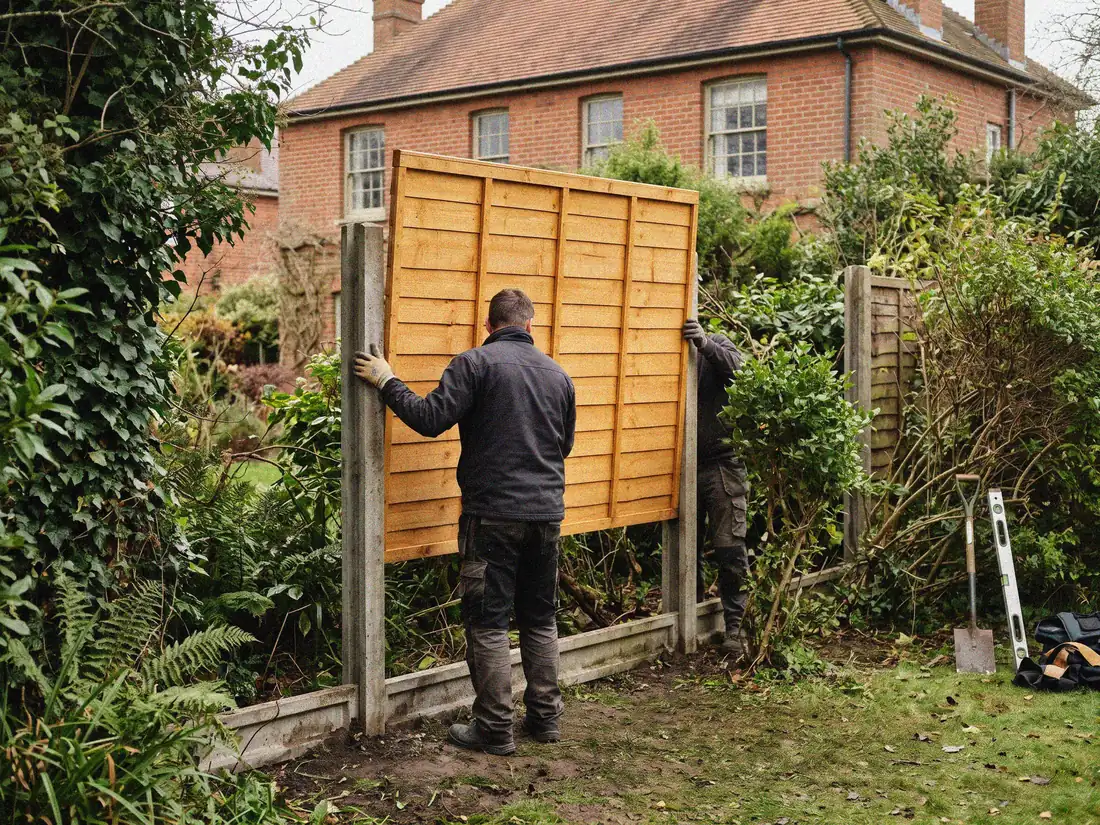
How do they compare?
| Post mix | Mixed concrete | |
|---|---|---|
| What it is | A ready-blended, fast-setting mix in 20 kg bags | Cement and all-in ballast, mixed with water |
| How it goes in | Pour dry into a hole a third full of water | Mix first, then shovel in around the post |
| Speed | Sets quickly, so the post must be plumbed straight away | More time to adjust; slower to harden |
| Best for | Standard fence posts; smaller gateposts | Larger gateposts; when concrete is being mixed anyway |
| Not for | General concreting such as bases and paths | — |
How big should the hole be?
Whichever you use, dig the hole about three times wider than the post and about one-third of the fence height above ground deep. For a typical 1.8 m fence with 100 mm posts, that’s roughly 30 cm wide and 60 cm deep.
How much do I need?
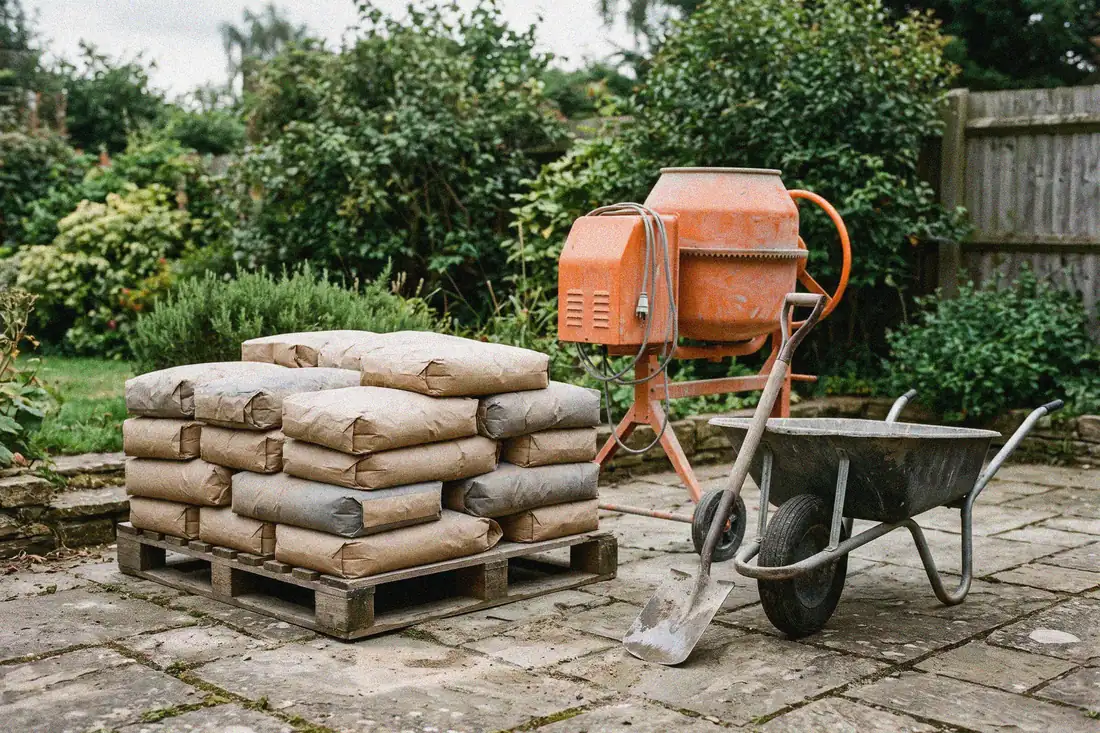
| Hole (width × depth) | Post mix (20 kg bags) |
|---|---|
| 30 × 45 cm | About 1¾ |
| 30 × 60 cm | About 2 |
| 30 × 75 cm | About 2½ |
So 8 posts in 30 × 60 cm holes need about 16 × 20 kg bags of post mix. For mixed concrete, a 1:5 mix needs about 370 kg of cement and 2.2 tonnes of ballast per m³ of concrete. Use the post mix calculator or the ballast and cement calculator.
What mistakes should I avoid?
- Not checking the post is plumb straight away: post mix sets fast.
- Holes too shallow, which lets posts lean in strong wind.
- Using post mix for paths or bases: it isn’t made for that.
- Fixing panels too soon: wait until the mix has hardened, as the bag directs.
Calculators for this job
More guides
 Turf vs grass seed: which is best for a new lawn?
 Sharp sand vs building sand vs kiln-dried sand
 How to build a sleeper retaining wall (UK guide)
Barrowload guide · UK · Figures are typical; always check your product and local rules.