Home / UK calculators / Soil, compost and mulch
Muck away calculator
Enter the area and depth you’re digging to see the cubic metres of soil, how much it bulks up once dug, and its weight in tonnes.
How much soil will I dig out?
Multiply length × width × depth for the volume in the ground, then allow for bulking: dug soil takes up more space. Digging out 5 × 4 m of topsoil 15 cm deep removes 3 m³ in the ground, which becomes about 3.75 m³ once dug and weighs about 4.35 tonnes.
On this page
Key facts
- Dug soil bulks up: topsoil by about 25%, clay about 30%, sandy soil about 12%.
- Broken concrete bulks about 60%, and mixed rubble about 50%.
- A cubic metre of soil weighs roughly 1.45–1.75 tonnes in the ground.
- Heavy waste is often limited by weight before space, in skips and grab lorries alike.
Why does soil bulk up when it’s dug?
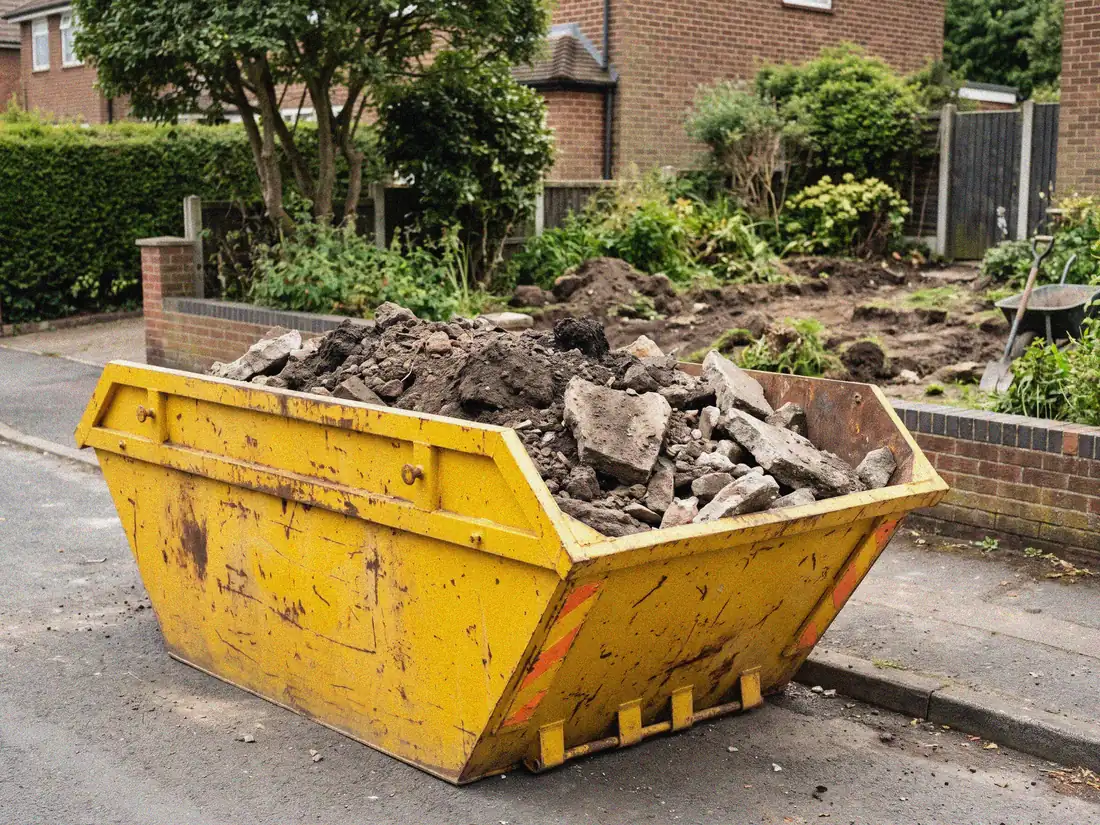
Soil in the ground is compacted. Once dug, air gaps open up between the clods, so the same soil takes up more room: plan muck away by the volume once dug, not the size of the hole.
| Material | Bulks up once dug | Approx. weight in the ground |
|---|---|---|
| Topsoil | About 25% | About 1.45 t per m³ |
| Clay soil | About 30% | About 1.75 t per m³ |
| Sandy soil | About 12% | About 1.6 t per m³ |
| Concrete or paving | About 60% | About 2.3 t per m³ |
| Mixed rubble and bricks | About 50% | About 1.8 t per m³ |
What are my muck away options?
| Option | Good for |
|---|---|
| Skip | Small to medium amounts, if you have space; see the skip size calculator |
| Grab lorry (grab hire) | Larger amounts, collected straight from the pile; needs good access for the lorry |
| Muck away bags | Small jobs; collected by the supplier |
Prices and load sizes vary by company, so get quotes with your volume and weight from this calculator.
What mistakes should I avoid?
- Booking by the hole’s size without allowing for bulking.
- Ignoring weight limits on skips for heavy soil and rubble.
- Mixing clean soil with rubble or waste, which can cost more to remove.
- Not checking access for a grab lorry before booking.
How is it calculated?
Volume in the ground = area × depth. Volume once dug = volume in the ground × bulking factor. Weight = volume in the ground × the material’s in-ground density. The factors are the same ones our skip calculator uses.
Worked examples
| Job | In the ground | Once dug | Weight |
|---|---|---|---|
| 5 × 4 m topsoil at 15 cm | 3 m³ | 3.75 m³ | About 4.35 tonnes |
Sources
- Bulking and density figures are typical values for each material, the same as in our skip size calculator
Real figures vary with moisture and soil type, so allow a margin.
Common questions
How much does soil bulk up when dug?
Typically about 25% for topsoil, 30% for clay and 12% for sandy soil.
How much does a cubic metre of soil weigh?
Roughly 1.45–1.75 tonnes in the ground, depending on the soil and how wet it is.
Skip or grab lorry for muck away?
Skips suit smaller amounts; grab lorries suit larger piles where the lorry can reach. Weight limits apply to both.
How do I work out muck away tonnage?
Volume in the ground (m³) × about 1.45 for topsoil or 1.75 for clay gives tonnes.
Can I reuse dug-out topsoil?
Clean topsoil can often be reused for beds or levelling; subsoil and clay are better kept for fill.